

Of all the Tonle Sap floating villages, Kompong Phluk is where I’d recommend you go.
In 2015, I went to Kompong Phluk for the first time. I wasn’t working as a guide back then, but as I drove a group of travellers out to take the boat headed to the village, I decided to hop on with them. I was every bit as curious about the place as the people in my car.
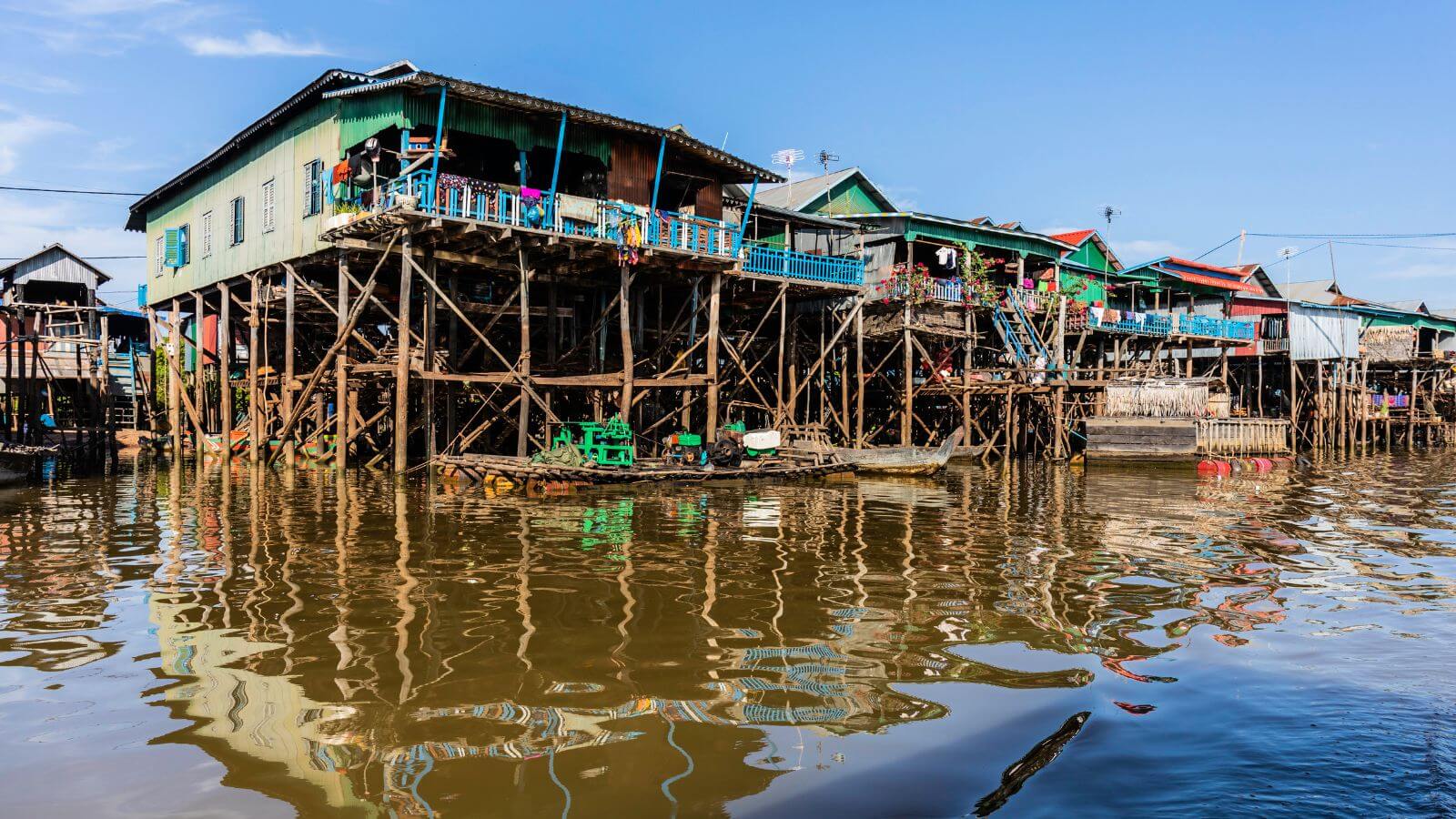
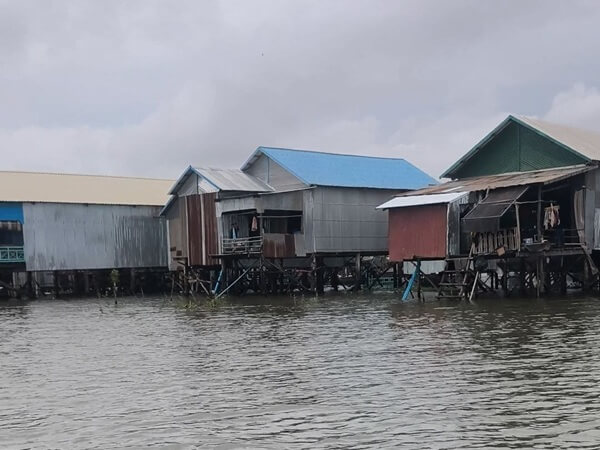
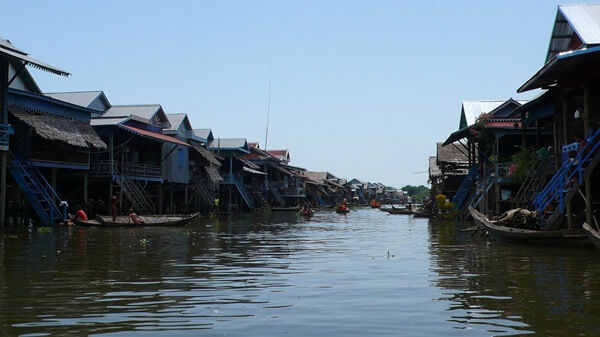
The first thing that jumps out at you when you get there is the construction or architecture of the houses, if you will. You see, most traditional Cambodian houses are often constructed on 4-metre-long, thick concrete pillars. In Kompong Phluk they stand on multiple thin wooden poles 6 to 9 metres tall. The lake rises and falls under them year after year, and I still wonder how they last.
Where this Tonle Sap floating village is and how to get there
Kompong Phluk is a fishing village on the edge of the Tonle Sap, about 30 km southeast of Siem Reap. Around 4,000 people live there in about 1,000 families, most of them Khmer.
You might read online that it’s a Vietnamese community, but that is more true for the other two floating villages, Chong Khneas and Kampong Khleang. If you’re still choosing between them, this guide to visiting the floating villages responsibly compares all four villages in Siem Reap.
It’s a 45-minute drive from Siem Reap city centre to the boat landing. From there you get on a small 10-seater wooden boat that carries you up a channel into the village in about half an hour. A tuk-tuk is fine for the road as it has been recently renovated, unlike a lot of dirt roads here.
Along the way, people often ask me to stop for cows and buffaloes and I’m always happy to do so. The trip to the boat landing itself is a nice way to see our beautiful countryside.
The village where you row to see the neighbours
In the wet season, the water from the Tonle Sap rises to about a metre under the floorboards. While this has a few implications, what concerns me most is sociability. Even though the houses are close to each other, you can’t simply walk next door. You would have to get your small oar, hop on a boat, and row to the neighbours.
I couldn’t live like that. We Cambodians (on land at least) are very social people. We like to drop in on each other multiple times throughout the day. Having everyone that close yet a boat ride away would be quite difficult for me.
The other thing that surprised me was the children. Most Cambodians never learn to swim, adults included. But as you might have guessed, every child in Kompong Phluk swims.
The story I heard is that parents put them straight into the lake when they’re small and let them learn from there, just like a baby swimming class. It makes sense to do that type of training early on given that drowning is one of the main causes of child death in Cambodia, according to UNICEF.
Wet season or dry season?
If you want to see the village at its most picturesque, with high, mostly clear water and green trees all around, come between August and December. The water peaks around October.
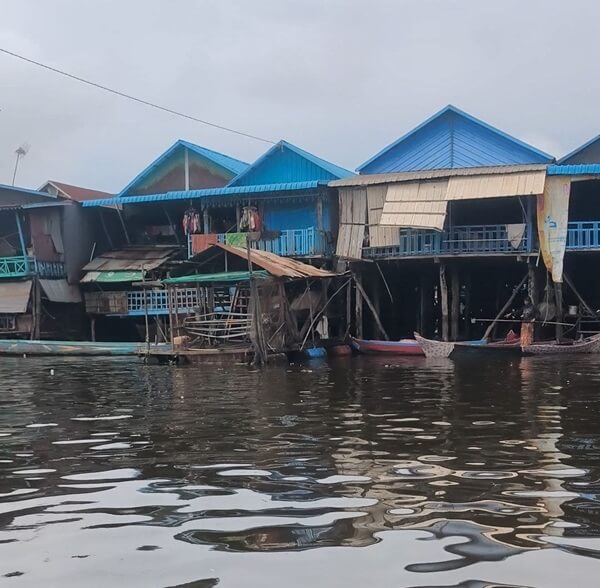
From March to May, the lake drops so far back that instead of water you see the red dirt road next to the houses. Whatever is left of the water becomes muddy as the shallowness allows it to pick up the dirt from the ground.
Some people prefer the dry season because that is when you see people’s daily lives the clearest. Kids walk to school, parents head out to fish and nets get mended under the houses.
How the boats work and what you should pay
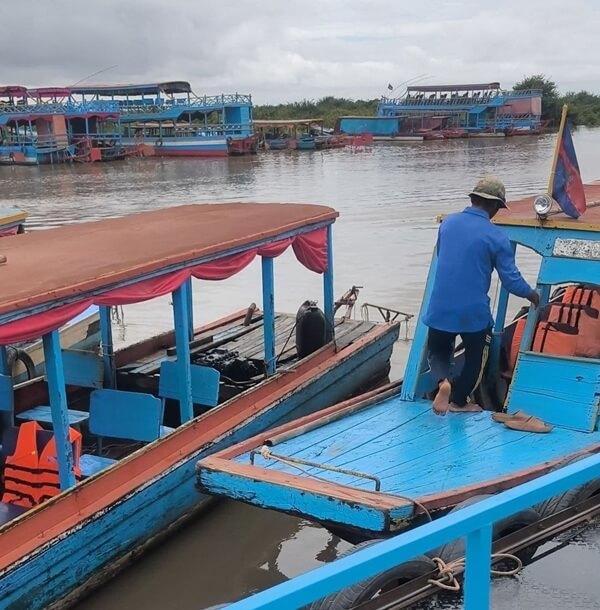
The village runs its own boats. Every family owns one and takes turns operating your ride between the landing and the village. The women also take turns rowing the small paddle boats through the forest.
Part of every fare goes into a fund for the whole village, and the rest goes to the family doing the trip. The community sets the price for the village boat, which is $23 per person. The paddle boat through the forest costs $11 per boat for one or two people.
If you book through someone, ask what the boat costs and who it’s paid to. Travellers have told me they paid well over the set $23 for the same boat. Pay the price the village sets.
Inside the flooded forest
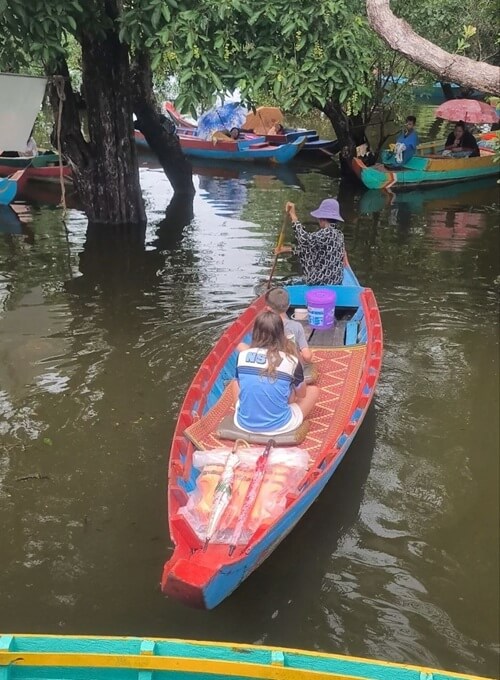
The paddle boat ride takes 45 minutes to an hour and only runs in the wet season when there’s water. You sit low in a small wooden boat while a woman of the village rows the boat close to each tree so you can see their roots going down into the water. It’s a quiet and peaceful place. You hear the trailing water beside you as you coast through.
The village protects the forest because it’s very important to the fish ecosystem there. It has many other benefits, such as holding down nutrients in the soil. That’s why I recommend you hire a local guide for the day to help explain and walk you through the small details.
There’s a small crocodile farm in the village where you can feed a big one for $5. People who’ve just seen it sometimes spend the paddle ride watching out for crocodiles, but you can relax because wild Siamese crocodiles are critically endangered. The woman rowing you also knows the area well.
The kids selling books and pens
At some point a child will probably come up to you with books or pens, asking $1 or $2. Sometimes it’s an older person. It happens at Kompong Phluk, at the temples and almost anywhere in Cambodia that visitors go.
Older TripAdvisor reviews of Chong Khneas (the floating village closest to town) carry titles like “Tourist trap” and “An Absolute Con”. Reviewers describe children on boats asking for money, kids holding snakes for photos and a rice “donation” stop where one person was asked for “$50USD!!!!” a bag.
Most of those reviews are from 2012 to 2020. It is a bit different now, but this is part of a more nuanced issue that we need to solve.
You might have heard of another story too. In 2018 a 14-year-old called Thuch Salik went viral after a Malaysian visitor filmed him. He sold souvenirs at Ta Prohm and Phnom Bakheng and had taught himself bits of more than 10 languages from talking to the tourists he sold to.
Once the video spread, a Chinese company offered to pay for his education, and he went to study in China. He recently came back home and was able to get other work. It’s a great story. But it’s also one boy and one video. When Channel News Asia covered it, the same report described the kids still waiting at the exit ramp of the Tonle Sap sunset boats “with hands outstretched”.
So should you buy?
The official Angkor visitor code of conduct says no. According to the code, giving candy or money to children “encourages them not to attend school but to beg”. It asks you to give to a recognised charity instead.
There’s a 2023 study of 22 child sellers in Siem Reap, which found something more complicated. A lot of these kids used to use what they earned to pay for school. When 14 of them were forced to stop selling, they could not afford school.
However, I’ve also seen cases where kids were selling at bus stops, usually at petrol stations, when, to the side, you can see their parents driving some expensive SUV, putting small snacks and souvenirs onto trays which the kids will carry and then wait in front of buses to sell.
You can’t really tell any of this from an encounter with a kid. One child might be paying for their own school fees while another is out there being part of a larger family scheme, and you have no way to know which is which.
My advice is to stay kind while saying no to buying from children. You can smile and say, “No thank you,” and if they want to keep chatting, chat with them.
As part of our mission, we give out books and pens ourselves. Before handing anything over, we ask each child if they want one. Some say no, and that’s fine. We don’t take photos of them with it either. We have this ideology that there’s nothing too small. And the kids usually appreciate these small things.
If you’d like to help in the same way, find out where the nearest school is or give to a registered local charity.
Is it OK to visit a Tonle Sap floating village?
Yes, and the people who live there agree. They know visitors are a big part of how they can afford to stay in the village. The boat fund, for example, spreads that money around the whole community.
Most people there are used to cameras and happy to talk if someone can translate. You’re watching people get on with their day.
A few things help the visit go well:
- Ask before you photograph someone up close, especially children.
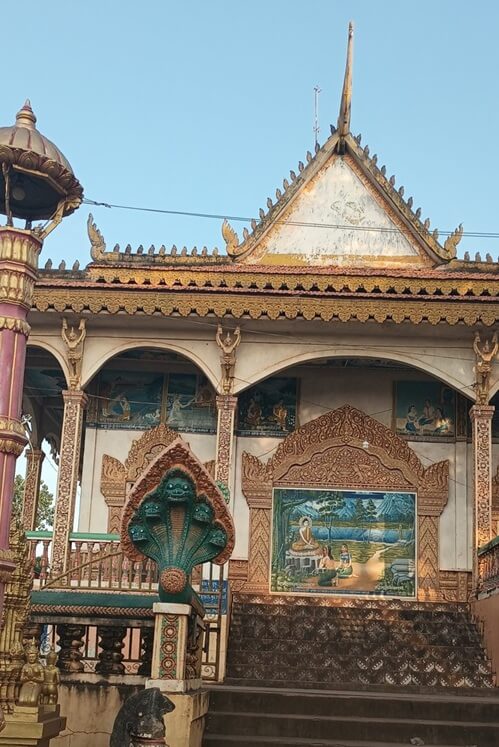
- Cover your shoulders and knees if you stop at the pagoda. It sits on higher ground in the middle of the village and stays dry all year. Monks and children live there.
- Eat in Siem Reap before or after. Living on the water means no proper bathrooms or restaurants.
- Carry small notes for the boats. US dollars and Cambodian riel both work.
Stay for the sunset
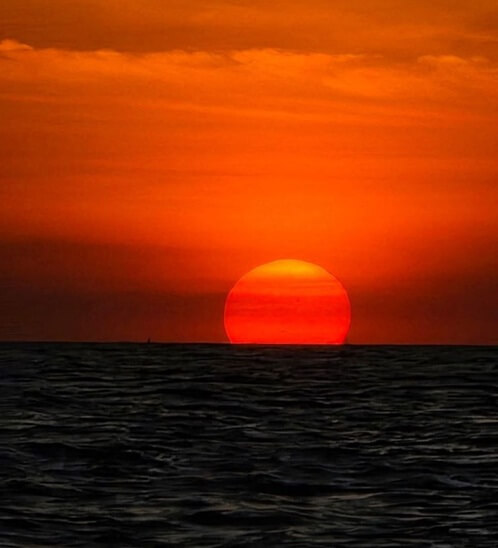
If you can, take the boat past the village onto the open lake late in the day. The sunset out there is one of my favourites around Siem Reap in any season.
Summary
- Kompong Phluk is the Tonle Sap floating village I’d pick first. Getting there from Siem Reap takes about 45 minutes by road and 30 minutes by boat.
- Go August to December for high water and the flooded forest. March to May is lower and drier but shows you more daily life.
- The village boat is $23 per person. The paddle boat is $11 per boat for one or two people.
- Don’t buy from children. Give to a school or a registered charity instead.
- Eat in town, ask before close-up photos and stay for the sunset if you can.