

Both the Pangarchulla and Kuari Pass have the same route but the destination is different. Both start from Dhak village near Joshimath, close to the Nanda Devi Biosphere Reserve. From Dhak to Khullara, both treks have the same path; after that, the path gets separated. Kuari is a pass trek, while Pangarchulla is a summit trek.
If you are a beginner, you can choose the Kuari Pass trek. It is known for its beautiful forest trails, open alpine meadows and panoramic mountain views. It is a good choice for trekkers who want to experience the beauty of the Himalayas without taking on a demanding summit climb. And if you are experienced, you can choose the Pangarchulla Peak Trek. It is a more challenging adventure that involves steep ascents, rocky sections and, during winter and spring, snow-covered slopes.
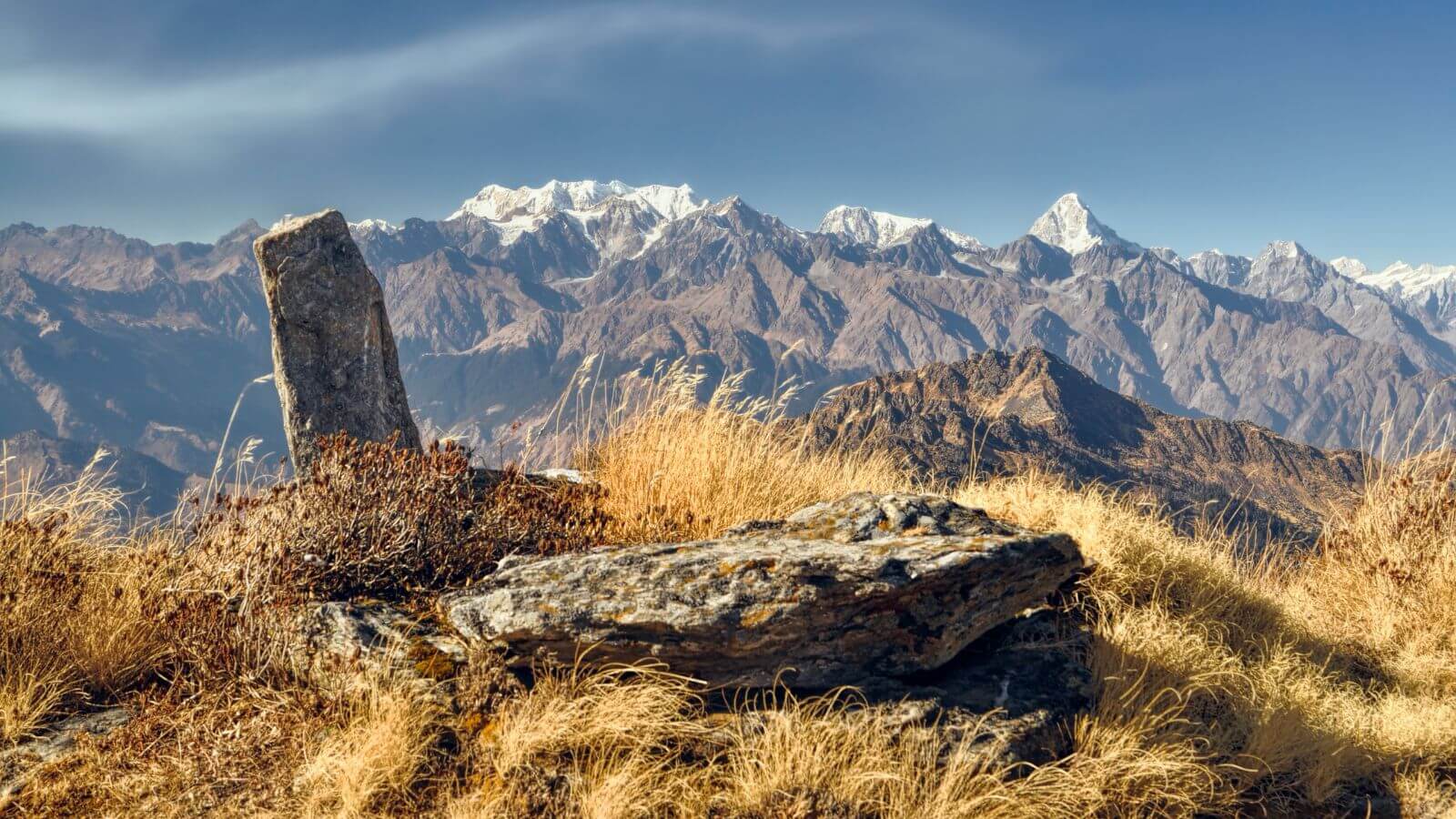
These treks share some sections of the trail and offer stunning views of Himalayan peaks, including Nanda Devi, Dronagiri, Chaukhamba and Hathi Ghoda. However, the overall trekking experience is quite different.
One trail, two treks
Both treks start from the same point. The drive from Dehradun to Joshimath and a few kilometers from Joshimath to Tugasi/Dhak are all the same route for both. Forest trails and meadow fields, till here it is the same; then the scree section goes forward to Pangarchulla and the Lord Curzon Trail to Kuari Pass.
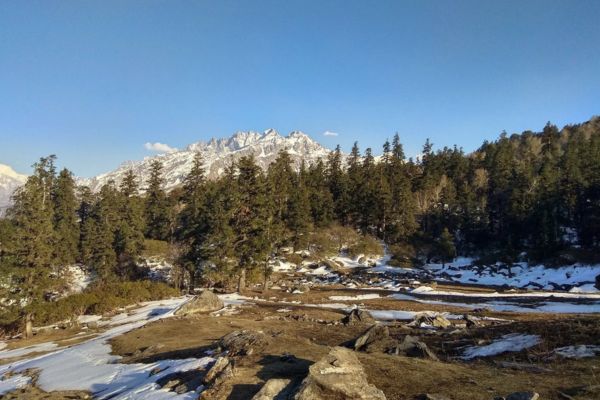
The route passes through Gulling and Khullara, which are important campsites for both treks. Along the way, trekkers get beautiful views of prominent Himalayan peaks such as Nanda Devi, Dronagiri, Chaukhamba and Hathi Ghoda.
The main difference comes near the final section of the trail. For Kuari Pass, trekkers continue towards the pass, which offers a panoramic view of the surrounding Himalayan ranges. For Pangarchulla, the route takes a different direction towards the summit, involving a steep climb over rocky terrain and snow-covered slopes, depending on the season.
Summit day: the biggest difference
The biggest difference between the Pangarchulla Peak and Kuari Pass treks becomes clear on summit day. Even though both treks have a lot of common terrain, the last day ascent gives a totally new experience.
- Kuari Pass: Summit day is relatively easy and short. During the trek, one should hike about 10 km for six hours in order to reach Kuari Pass, which is located at 12,532 feet altitude, and then descend to Tali campsite. This trekking day is not as hard as the summit day of Pangarchulla.
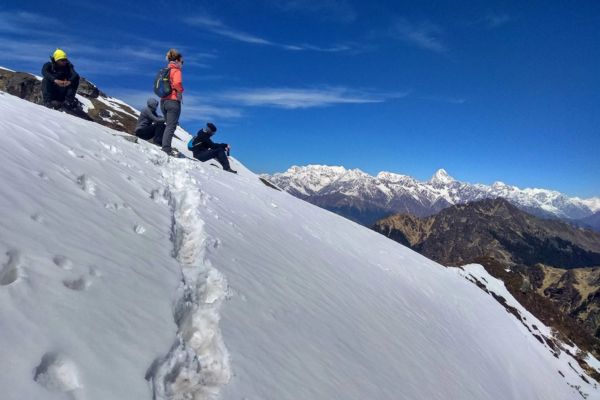
- Pangarchulla Peak: This summit day is quite difficult. Usually, trekkers start their trip at 3 AM and travel 14 km in 12 to 14 hours. They reach 15,060 feet altitude and then descend to Khullara campsite. The trek is quite tough since there are some steep sections, boulders, snow and a ridge where wind blows.
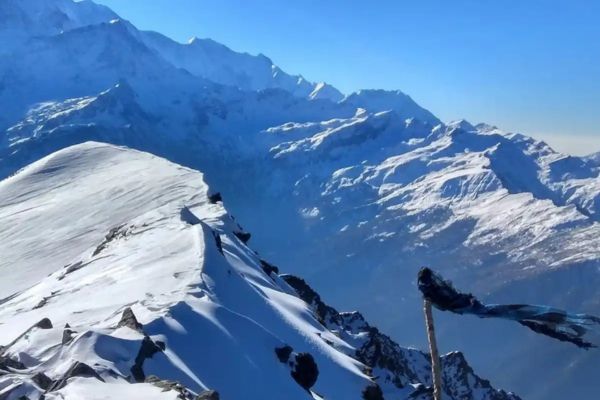
Mountain Views From Both Treks
Kuari Pass: The pass offers a wide panoramic view of the surrounding mountain ranges. Trekkers can spot prominent peaks such as Nanda Devi, Dunagiri, Kamet, Trishul and Hathi Ghoda. The open landscape makes it a great destination for enjoying uninterrupted Himalayan views.
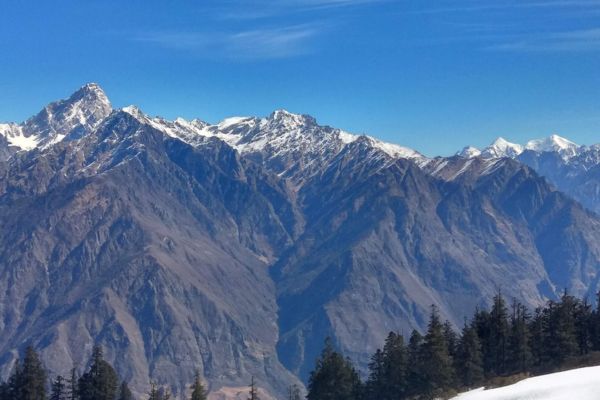
Pangarchulla Peak: From the summit, trekkers get a higher vantage point to admire these Himalayan giants. Along with Nanda Devi, Dunagiri, Kamet and Hathi Ghoda, views of Mana Peak and Neelkanth add to the experience.
While Kuari Pass offers a beautiful mountain panorama, Pangarchulla provides the added satisfaction of reaching a high Himalayan summit.
Difficulty and fitness
Kuari Pass and Pangarchulla Peak have a lot of differences regarding physical effort and the level of fitness needed. Even though the starting path of both treks is similar, the latter one requires more strength because of its steep summit climb.
Kuari Pass Trek: It is a moderate trek that is about 27 km long. A physically fit trekker who has done at least one or two treks before can easily undertake this trek. It is not very difficult because of its gentle ascents.
Pangarchulla Peak: This trek is rated as a moderate to difficult trek that is around 35 km long. Good stamina and endurance are required for the steep ascent, boulder passages and summit day. Prior experience in doing at least one or two Himalayan treks would be beneficial.
Both treks require about 4 weeks of physical training. Walking, jogging, stair climbing and leg training can be helpful to you in this regard.
Best Time To Visit Each Trek
The best time to visit Kuari Pass and Pangarchulla Peak depends on the kind of trekking experience you are looking for. Both treks are accessible during different seasons, but snow conditions play an important role in choosing the right time.
Kuari Pass: December to February is a good time for trekkers who want to experience snow-covered trails and winter landscapes. October and November are ideal for clear mountain views, pleasant weather and excellent visibility of the Himalayan peaks.
Pangarchulla Peak: March and April are generally the best months to attempt this trek. During this period, snow remains on the upper sections and summit ridge, making the final climb more adventurous. Snow conditions can vary each year, so proper assessment and guidance are important before attempting the summit.
Which one should you pick?
Choosing between Kuari Pass and Pangarchulla Peak depends on your fitness level, trekking experience and the kind of adventure you want.
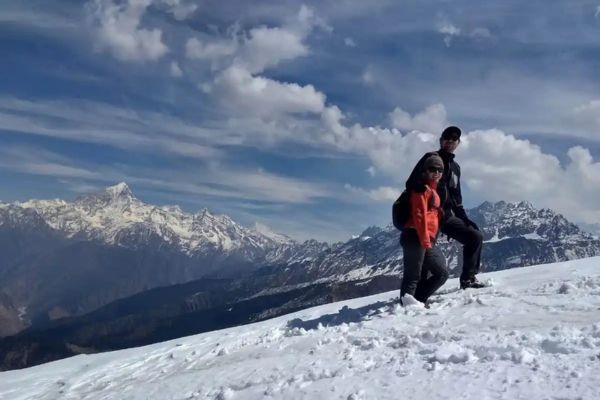
If this is your first snow trek in the Himalayas, Kuari Pass is a better choice. It offers beautiful winter trails, forest sections, open meadows and stunning mountain views without requiring a demanding summit climb.
However, if you have already completed one or two Himalayan treks and want to challenge yourself with a proper summit climb, Pangarchulla Peak is worth considering. Its steep ascent, boulder sections and snow-covered summit ridge make it a more demanding adventure.
My suggestion would be to start with Kuari Pass and come back for Pangarchulla Peak once you have gained some trekking experience. Both treks offer something different, and experiencing them separately makes each journey special.
Final Verdict
Kuari Pass is ideal for a scenic Himalayan trekking experience, while Pangarchulla is for those looking for a challenging summit adventure.