



NOTE – This part of my travel stories page contains my book – Island of Solitude – that I wrote as a memoir of what our lives were like during pandemic lockdowns in Bali. We were stranded there for over two years, on a tropical island that was devoid of tourists, and were able to explore and move about, alone, for the entire time.
I will be posting this book chapter by chapter, and it will remain here, free for readers of The Travel Author forever.
Island of Solitude – Chapter 1
“Run!”
Everything about the current, rapidly evolving situation in Australia, and indeed the world, was perfectly summed up in that one simple word.
Little did I realize just how much those three small, seemingly innocuous letters would have the ability to shape the next four years of my life.
It was March of 2020, and I’d made the decision, months ago by this time, to completely transform my life. Quitting my high paying job didn’t seem like such a big deal at the time. Neither had selling my car, liquidating assets, and cancelling every account that I’d ever made with everything from insurance companies to the local library.
I was committed to changing my life. A total and complete overhaul was in order, and I knew that if I didn’t dive in, boots and all, then there was a chance, just a small one, that I might chicken out.
I was not going to let that happen.
My thought process at the time is best summed up by a fictional character from the incredible mind of Tom Clancy, one of my favourite authors.
“When he reached the New World, Cortez burned his ships. As a result, his men were well motivated.” – Captain Ramius, The Hunt for Red October.
Of course, in the 1990 film of the same name, Ramius is portrayed superbly by Sean Connery, and he absolutely nailed the above line, delivering it in his distinct, characteristic Scottish brogue. This, if anything, adds a hell of a lot more punch to its delivery, and injected a little more starch into my resolve whenever I thought of how much I was risking on this incredibly life-changing decision.
What no one, least of all me, saw coming was a pandemic that would shut down the entire world.
Which was devastating for someone that had just tossed it all in in a bid to become a full-time travel writer. I guess that’s what they call irony.
So, in mid-March, a full week before I was due to front up at the Virgin Australia check in counter at Brisbane airport, my concern that I would even have that chance began to peak. Rumours had started about possible airport shutdowns around the world. In Australia, it was becoming obvious that high ranking decision makers were getting nervous.
I was getting nervous.
I still don’t know exactly what it was that made me jump the gun like I did. Perhaps it was my sudden and prophetic ability to read between the lines. More likely, it was simply good old Aussie common sense. In the end, whatever it was, I wasn’t ready to place my trust in anything that any journalist or reporters were saying.
I couldn’t just sit and wait, hoping that they wouldn’t shut the airports. There was no way that I could afford that. I’d burnt my ships months ago, their blackened hulls barely recognizable as the waves of my old life lapped lazily at their sad skeletons, taunting and teasing my decisions.
Which is why I reached out to an old friend.
This was someone I trusted. Someone that I knew had the ability to analyze the situation, and provide me with some well thought out, constructive advice. Her reply came back in that one simple word – “Run!”
So, I ran.
It was late at night as I hastily opened Skyscanner and began feverishly searching for flights. My Virgin Australia booking for Bali was in four days. I needed something sooner. Much sooner.
I settled on a flight in two days’ time. Thirty-six hours away to be exact. It would give me enough time to tie up some final loose ends and say my goodbyes. At the time, I thought it would be for a few months. How naïve we all were at that point of the pandemic.
Virgin refused to change my flight. I guess they were beginning to worry, just like everyone else. Even so, it only took one call to their help line to realize that it’d be a better chance that I’d already be aboard my flight in thirty-six hours than that I would have progressed any further in their queue. Despite their constant assurances that my call was important to them.
In the end, I took the hit. I booked the flight and would handle a refund, if any, on my original flight later.
I needed to get out of the country. My bank account, while quite healthy, would look a darn sight better from Bali, where I could live for a few years on the same amount of funds that would only last me six months in Australia. I simply couldn’t afford to stay, and if I did, I certainly didn’t enjoy entertaining the prospect of begging for my old job back.
Cortez didn’t do that, and I winced in physical pain at the mere thought of Sean Connery giving me that disapproving, sidelong stare, one eyebrow raised, his piercing gaze slicing through me.
I didn’t sleep that night, and by the time Good Morning Australia started the next morning, I was packed and ready to go.
In hindsight, I’m not sure if I would have made the same decisions that I did back then, if I’d known how long the pandemic would last.
Would any of us?
I bid farewell to my son, who I lived with at the time, and promised that I’d be back in a couple of months to visit. Little did I know that it would be over two years before I’d see him again.
In the end it was probably for the best that we didn’t know. I’m not sure that I could have stayed the course and fully committed to the path that I’d set myself if I had. Thinking about it now, it seems strange that the thought of setting off into the unknown is somehow less daunting than the prospect of facing a future that is more transparent. I guess it’s as they say – knowledge is dangerous. Although ninety-nine times out of a hundred I wouldn’t agree with that, on this occasion, it seemed appropriate.
Brisbane Airport was in a shambles when I arrived. Confusion was everywhere, seeping through the staff, passengers and security like its own mini pandemic. No one seemed to know what was going on. Everyone had their own personal opinions, and this made a simple process like checking in for a flight a nightmare that should easily have been avoided.
Something that I’ve learned about check in staff in Australian airports, is that they really have no idea how visas in Indonesia work. They make it a lot harder than it is. The confounding part of this is that it’s almost entirely an Australian issue. I’ve flown to Indonesia from nearly every international airport in Southeast Asia, as well as a few in Europe and the Middle East, and never had this issue in any of them.
The problem seems to revolve around the Visa Free Arrival, which allows Australians to fly to Indonesia, in most cases Bali, and stay for up to thirty days without the need for a visa. Technically, you should have a return flight booked, or at the very least an onward flight. They never check, or ask for proof of this in Bali, but in Australia, the check in staff put on their little Indonesian Immigration hats and become like Military Police.
Now, you really can’t complain when they’re following the letter of the law, but the confusion really comes when you tell them that you don’t need a flight home, as you’re not going to be availing yourself of the Visa Free Arrival, and instead will purchase a Visa on Arrival. Then, you plan to utilize the sixty days that visa grants you to apply for a six-month visa.
Honestly, the numb looks on the faces of the four or five check in staff and two supervisors I attempted to explain this to would have been comical, if not for the fact that I was silently panicking that they might red flag me and not permit me on the flight. Airline staff don’t enjoy being embarrassed, and I’ve seen passengers bumped from flights for less, even when they were totally in the right.
Being bumped was entirely possible, as the tension around the airport was on a knife’s edge. Everyone could feel it, and it only got worse when word began circulating that they’d announced a possible full closure of Australian borders in the next forty-eight hours.
In the end, a third supervisor informed me, in no uncertain terms to book an onward flight, or I wouldn’t get on the plane. So, I did, and eventually lost that flight and the money I spent on it. At that stage though, I just did what I had to do.
The other interesting point to note about leaving Brisbane airport that day was the fascinating phenomenon that caused almost every staff member that I met to turn into an amateur psychiatrist.
“You’re leaving the country?”
Standing at passport control, boarding pass in hand and backpack on my back, I’m fairly certain it was the first time I’d ever been asked that question. At first, I thought it was a joke, then maybe some sort of tricky new immigration question that I had to get right in order to proceed.
“Ah, yeah,” I replied hesitantly.
“You don’t seem certain.”
“Yes.” I drew my shoulders square and forced a smile. “I’m heading to Bali.”
“Hmm.” The immigration officer frowned and looked at my passport. “You sure you want to?”
“What do you mean?”
I was really confused now.
“They’re shutting the borders in a few days.”
“I know.”
I then broke the cardinal rule of passport control. Never, ever, under any circumstances make a joke.
“I guess it’ll be a long holiday then.”
The confident smile that I’d spent the past minute painfully conjuring up froze on my face as I realized that I’d just screwed up. I’d traveled dozens of times in the past, and knew better than to joke with customs, immigration, or pretty much anyone at an airport, including the probationary kid at McDonalds.
“Well, it’s not too late to change your mind.”
I stared at the officer a little longer than was probably smart, before I shook my head slowly. I wasn’t trusting myself to form words anymore.
“OK”
The officer handed back my passport and I continued on my way. It hadn’t really occurred to me that they’d pushed all the passengers through the manual passport control instead of the auto gates. Perhaps they wanted a last chance to convince us that we were throwing our lives away. That we shouldn’t be leaving the country.
Perhaps the immigration officer was a psychiatrist in uniform.
Who knew? By this time, I was lost. A thick blanket of fog had settled over my mind, and I stood in front of the departures board for a full minute before I actually registered what it was I was searching for.
Bali, Denpasar, Gate 22.
Hopefully, arriving in Bali might be a slightly smoother experience.
Arriving in Bali was a breeze compared to leaving Australia. In fact, you would have been forgiven for thinking that word of an impending pandemic hadn’t even reached Indonesia yet. Bali’s Ngurah Rai Airport was simply business as usual.
This is fairly normal for the Balinese though. They generally don’t let very much phase them, and as a result they tend to live their lives with a jolly outlook and a smile seemingly frozen on their faces. This is one of the reasons that travelers such as myself will continue to return to their beautiful shores. Or in this case, the airport.
Passing through the airport, I purchased my visa on arrival, knowing as I did so that my recently procured flight to Kuala Lumpur was now useless. Moving away from the counter, visa and passport in hand, I made a mental note to contact Air Asia and attempt to secure a refund.
As I passed by immigration, it occurred to me that if they’d had any concerns over airports shutting down, that they probably shouldn’t have even let me in the country. If they’d heard the news of Australian borders closing over the next couple of days, there certainly were no indications of that either. The first to become concerned over that type of news would most certainly be foreign countries with travelers stranded within their borders, unable to return home.
As it turned out, I passed through unchecked, and, low and behold, no one asked for proof of a return or onward flight booking. Silently, I wished that I’d had the entire Virgin Australia check in staff on facetime, just for the opportunity to say “told you so”.
The arrivals hall at Bali airport was chaotic as usual.
As a regular traveler, I’ve often commented to my travel companions, on most occasions my girlfriend, how the type of reception that you receive at an airport is generally a true reflection of what you can expect in the country itself. It’s akin to watching the extended trailer for a new release movie, before watching the movie itself.
In this case though, it’s already too late to back out.
Two totally opposite examples of this theory are Fiji and Bali.
In Fiji, you leave your plane and walk along a beautiful open-air walkway into a wonderful immigration hall where you’re greeted by several locals playing guitar, dressed in traditional attire, singing, smiling, and being generally welcoming. They aren’t expecting any money or tips and are just being genuinely nice human beings.
In Bali, you’re rushed past signs that warn you that you can be arrested for carrying nearly anything into the country, before you’re forced to wait an hour for your luggage to arrive. Then, you emerge into a solid wall of humidity that is compounded by the five million taxi drivers jostling and yelling, trying to charge you ten times the average price for a ride to your resort that’s located just around the corner.
This is not to say that Indonesia is a horrible place, because I love the country, but is a very interesting insight into the greetings you receive in both these places, as well as dozens of other airports around the world that I could use as similar examples.
Pushing my way past the lines of taxi drivers, ignoring their calls and brushing away from outstretched, imploring hands, I made my way into the car park. There, sitting in a small white Daihatsu was someone I hadn’t seen for over a year.
My mother has lived in Bali for over twenty years. When I decided to uproot my life and become a travel writer, it only made sense to begin in Bali. Not that I really needed to visit – I’d holidayed on the island a dozen times over the past decade or so.
Starting the journey that was to become my new life in Bali just made sense. Especially when my mother owned a large, five-bedroom house in the beautiful beachside neighborhood of Nusa Dua. Leaving three suitcases of clothes in Bali would make for a lot easier, handy home base to return to whilst traveling than having to hoof it back to Australia every few months.
Settling into the guest rooms at my mother’s house was simple and familiar. I unpacked immediately, showered, and headed straight to bed.
If I’d lingered a bit longer, waited up and chatted for an hour or so, we would have heard the news that I’d arrived only just in time.
Indonesia had announced that in two days, they were joining Australia and the rest of the world by shutting down their own borders. Airports would begin to close, and those foreigners that were in the country needed to leave right away, or risk being stranded a long way from home.
But then, being stranded in paradise didn’t seem that bad to me.
Chapter 2
One of the most confounding, and oft times amusing daily events for us during the pandemic in Bali, was the short sighted and completely fictional reporting from media outlets in Australia.
Lockdowns in Bali began small, and slowly ramped up. Never were they completely intrusive upon daily lives, such as they were in other parts of the world. Nevertheless, we found ourselves on most days with little to do, and the need to fill our time with amusement, lest we waste away our time gazing at palm trees and errant squirrels (tupai) darting back and forth along power lines.
This amusement, for the most part, came in the form of reading the daily online news from Australia.
The absolute drivel that was coming out of Australia was laughable at best, and downright negligent at its worst. We could only put these terrible pieces of “reporting” down to scare tactics that were designed, rather clumsily, to convince expats to return home. If not, perhaps they were a simple extension of the “Bali bashing” that Australian media outlets enjoy employing on a regular basis. Either way, the almost daily articles caused considerable amusement for those of us that were actually on the ground in Bali at the time.
According to reports from “trusted sources” Covid was rampant throughout the island of Bali, and hospitals were overflowing. People were dying in droves, and anyone still on the island would most certainly meet their maker before any sort of vaccine could be produced.
What was most shocking about these reports is that they simply were not true. We didn’t know anybody that knew anybody that had even heard of someone that had the virus. Here on Bali, everyone was healthy, and even weeks into the main lockdowns, the island had only reported less than fifty positive cases.
Now, figures can be fudged, we all know that. Hell, governments around the world and large corporations make billions of dollars every day by doing just that. But in Bali, the proof was in reality, and that was that no one was sick. It was simple.
But no one being sick in Bali wouldn’t have made great headlines in Australia, and certainly not looked good for the government that had coaxed people to return post haste to their home shores. While intentions were good, the reality was that after a few months, and well into the fatal spread of the Delta strain, Bali was a lot safer place to be than Australia.
This didn’t help set the minds of our loved ones back home at ease. Not a day would go by that I wouldn’t receive at least one message of concern from Australia, from a friend or relative that had read the latest reports. Everyone was afraid that I’d made a massive error in judgement by staying in Bali, and many begged me to return home.
To this end, Qantas organised repatriation flights for any stranded Australians that wished to return to their home shores, and the safety of western medicine. Many took up this option, and entire families that had set themselves up in Bali with homes, businesses, schooling and local networks abandoned it all in a bid to stay safe.
While this was good intentioned, many of them lost everything with this decision.
For mine, I contacted my kids back home and reassured them of what was happening here on the island. They understood, having lived through many years of negative media publicity toward Bali from Australian outlets, and made me promise that if things turned bad that I would return home. Fortunately, that was never a problem that I had to face.
We never really found an answer as to why Bali wasn’t affected by Covid like other parts of the world. Even other regions and islands of Indonesia were affected a lot worse than we ever were.
There were two schools of thought about this. Early speculation was that the virus didn’t survive and thrive in a hot, tropical climate. This thought most likely spawned from the fact that in other parts of the world, coronavirus was spreading rapidly mostly during the cold winters. This was later proven as mere coincidence as the virus began to spread throughout the tropics as well.
The other, more likely belief was that coronavirus had swept through the island months earlier. Bali, as a tourism hotspot and major hub in Southeast Asia, tends to see most flu’s and Viruses long before they reach other cities. It didn’t take long for the locals around Bali to recognize that the exact symptoms from coronavirus were identical to a mystery virus that had floored most of the population back in November and December of 2019.
Perhaps, therefore, Bali was, in a word, immune.
Jakarta was rife with the virus at one stage. This isn’t surprising for anyone that has ever set foot in the city. One of the most polluted cities on the planet, Jakarta isn’t a place known for its sanitary conditions. A virus set loose in the inner-city slums, where people literally live on top of each other and defecate into the local river, and its simply game over.
A couple of months into lockdowns, I began to hear about this firsthand. I’d started chatting with a beautiful lady that I’d met online, and during the worst of the pandemic we helped each other stay sane. She would tell me how shocking the situation was in Jakarta, where she lived – fortunately in a well to do complex removed from the worst of it, and I would make her feel completely jealous by regaling her of tales of our wonderful lives here in Bali.
This continued for four months during the pandemic, and silently we made plans to meet up, just as soon as domestic travel reopened once more. Of course, no one had any idea when that might be, and the way things were going, it could be months away.
Perhaps the hardest part about those first few months was the unknown. With the media at home seemingly intent on taking pains to point out that Bali, and other parts of the world were worse off than Australia, then we began to wonder exactly how bad it was back there. Conflicting reports circulated daily, and with the blatant lies that we read on a daily basis about Indonesia, it came as no surprise when we began to worry about how much we could trust reports about the situation at home, that came from those same media outlets.
I tried, as often as I could, to speak to my children about it. Both were adamant that they were safe, and played down the situation and how bad it actually was. During lock downs I knew my daughter would generally be out of harm’s way, however as a police officer, my son was working right there on the front lines. I couldn’t help but worry, and with their reassurances ringing in my ears, I attempted to put it to the back of my mind and make the most of the situation I found myself in here in Bali.
That, however, is easier said than done when you’re a concerned parent.
Things were made a little easier by the fact that our lockdowns in Bali were rather pleasant to begin with.
Once the borders closed, Bali then shut itself down from any travel onto the island domestically. This meant not just closing the airport, but also shutting down the ferries running to Java and Lombok. Over the next few days and weeks, only a trickle of people were allowed in and out, as they either returned home to Bali for lockdowns, or headed back to their villages on other islands. Within several weeks, all movement had ceased.
Our initial lockdown was soft. We felt rather fortunate by this, as reports were already coming in from places such as Melbourne, where citizens were on extremely harsh restrictions. Ours, in contrast, were limited to the need to wear masks, work from home, and not go anywhere that might be deemed too far from our residence.
These rules were great for the locals. They took them completely within their stride. Masks were easy to wear, as most Indonesians wear them whilst riding their scooters anyway. Transitioning to wearing them all the time simply meant not taking them off.
Working from home was easy too. It saved the locals on petrol, so the majority were happy to do it.
Unlike in other countries, there were no protests about civil rights. There was no grumbling or dissension about being told what to do. No one complained. Everyone just did the right thing.
Perhaps a part of this came from the fact that they knew, and understood, how deadly the pandemic was. They knew that it targeted the elderly and young first, and in Indonesia, the culture treats their elderly a lot different to how western cultures do. Indonesians will do anything to protect their elderly citizens, and if staying at home and wearing masks would keep grandma alive, then by Jove, that’s what they were going to do.
The problem, when it inevitably came, wasn’t from the locals, but from the tourists that were stranded on the island.
By now, popular tourist areas of Bali such as Kuta, Legian and Seminyak had more akin to old western ghost towns than thriving tourism hubs. Everything was shut down, hotels and resorts closed, and beaches blocked off. Further west though, Canggu, home of the majority of expats and tourists on the island, was attempting to live life like nothing had happened.
To this end, they were completely ignoring any rules being put in place by local authorities. They were partying at night, surfing, and gathering in crowded bars with not a mask in sight. Police and other, traditional local authorities were pulling their hair out as they set up road blocks, attempting to prevent these errant tourists from leaving the Canggu area, and enforcing rules to wear masks and, god forbid, helmets whilst actually riding scooters.
With limited options left open to them, they began punishing offenders by making them do push ups in the middle of the street. Traditional forms of punishment were off the table, after all. No one wanted to send people to jail, as there were enough problems there already with overcrowding in a time that screamed for the opposite. With the airport closed, deportation was certainly out of the question.
Eventually, they were forced to take a harder stance, especially when offenders began seeing it as a badge of honor, rather than a punishment to do push ups in the street. The last straw came when a large bonfire party was held at Canggu one night, on a beach that was closed to the public.
Meanwhile, back in Nusa Dua, we were enjoying open beaches and very few restrictions. The reason was simple. We were doing what we were told to do with a minimum of fuss.
The beach was open, if not for most activities, but at the very least we could walk the dog, exercise along the beachfront, and otherwise enjoy the area, just so long as we wore our masks.
Resorts along the Nusa Dua front had mostly closed down. I say mostly, as there were a few hold outs, even a couple of months into the pandemic. With no one knowing how long it would last before travel resumed, some of the larger resorts weren’t inclined to risk shutting down completely.
Others were simply living in denial.
I would walk every morning down past the resorts. In Nusa Dua, these are all big resorts that are mostly 5 or even 6 stars. Names such as Sofitel, Hyatt and Club Med grace the waterfront here, and each of them handled the start of the pandemic in their own way.
For a while, the Grand Hyatt still had guests. I’m not sure where they came from, but there was still a smattering of them around the pool each day. I mused at times that maybe they were long term guests, or even locals from around the area. Most of the hotels by this time were offering ridiculous deals to locals, simply to stay running. It wasn’t uncommon to be able to stay in a nice 3 or 4 star hotel in Bali at this time for an entire month for as little as $300 AUD.
Back to the Grand Hyatt though, and they were also one of the last resorts to empty their pool. They kept it running as long as they could, and once, months into the pandemic when all the guests had disappeared, we spied an elderly gent swimming in the pool with mask, snorkel and fins on. It turned out that he was the owner, taking the opportunity to inspect the pool with no guests around. Making lemonade, when life gives you lemons, I guess.
Further down the road, the Westin seemed to be operating in complete denial that anything was even happening.
Every day I would stroll past, and their staff were out at the beachside restaurant, diligently setting places at the fifty or so tables, with not a guest in sight. Each time I wondered what they were doing, and why they hadn’t shut down as yet. I supposed, as a well-established chain resort, that they could afford to stay open. Perhaps their other resorts in other locations were doing a lot better business than they were. It couldn’t have been hard, as the Westin at Nusa Dua had no guests at all. None of the resorts did.
On the bright side, their staff received a lot of valuable training on setting tables. Impeccably, I must say.
My daily walks became a thing of the past not long after the Canggu beaches were closed completely, and tourists forced to stay away from them. It was then that they began to move out to other areas.
Slowly, Uluwatu, Sanur, and then Nusa Dua began to shut off their beaches in the simple bid to stop the people from Canggu trying to surf and party on these beaches, now that they couldn’t use their own.
For us, this was when lockdowns really began to bite.
Chapter 3
A couple of months into lockdowns, we were beginning to understand what we could and couldn’t do.
For the most part, we were able to move around freely. Lockdowns were only soft, and with everyone staying honest about it, and not pushing boundaries (except for the louts at Canggu of course) authorities didn’t see the need to enforce rules too aggressively.
As a result, I’d only been in Bali for six weeks or so when I decided to purchase my own scooter. It was clear that I was going to be stranded on the island for a while, and investing in a scooter of my own would be a lot friendlier on the finances than hiring on a regular basis.
This turned out to be the best decision that I would make in my extended time in Bali.
Immediately, Bali opened up for me. Day after day I would slip out and explore the Nusa Dua area, beyond the boundaries I’d been restricted to whilst walking. With no roadblocks in place, I ventured out to Uluwatu, and cruised around the beaches with little to no traffic to bother me, in a place that normally sees traffic up the wazoo, and tourist buses lined up for miles.
Seeing how much we were actually able to move about with a surprisingly unrestricted amount of freedom (providing we were wearing masks and practicing social distancing) I decided to look into the chance of doing something that I’d had on my Bali bucket list for some time.
Climbing Mount Batur.
Bali, being an island of Indonesia, which sits firmly on one of the most active regions of the Pacific ring of fire, is home to two active volcanoes. The most famous, and visible of these is Mount Agung. Only shortly prior to the pandemic, from 2017 to 2019, Agung went through a very active phase, constantly rumbling, smoking and erupting. The airport was closed regularly as ash clouds billowed miles into the air, and local villages were evacuated.
As can be imagined, hiking and climbing of the mountain was also banned. Mount Agung is treacherous to climb at any time, however one does not want to be caught on its inhospitable slopes when it’s going through an active period.
This, of course, didn’t stop everyone, and in March of 2019, two foreign hikers, most likely from Canggu, were rescued after they invariably got themselves lost whilst breaking laws and putting their lives, and many others at risk. Needless to say, the book was pretty much thrown at them later that day by local authorities, and they were invited never to return to the Island of the Gods.
As treacherous as Mount Agung is, Mount Batur, Bali’s second active volcano, sits passively in his shadow, welcoming climbers and hikers with open arms.
Batur, by contrast, hasn’t erupted since the year 2000, and although the results of that eruption can clearly be seen in the form of a flow of cooled lava spewed out across the caldera, it doesn’t deter tourists from ascending to the peak every day.
As far as volcano hikes go, Mount Batur is a rather pleasant stroll, and is advertised as being suitable for anyone with a halfway decent level of fitness. After sitting around for a couple of months doing stuff all, this sounded right up my alley, and the perfect way to break up the monotony of our soft lockdowns.
Arranging a climb of Batur wasn’t hard, as you don’t have to look past Instagram or Facebook to find a guide, or tour, that can take you there. During covid, there were literally hundreds of guides out of work that were willing to jump at the opportunity.
Arrangements were made to be picked up at 1am on the day of the climb, from my home in Nusa Dua.
It’s a phenomenon of hiking in Indonesia, that no matter what hill, mountain, or volcano you arrange to climb, you will more than likely always be doing it in the dark. The reason for this is in order to view the sunrise, which although on most occasions is rather spectacular, seems to have an inordinate amount of importance placed on it. Perhaps, at some point in the past, a visitor has stated that they wished to summit in time to view the sunrise, and Indonesians have decided, as they are wanton to do, that this must be the preference for all future visitors.
The truth is that the sunrise on Mount Batur is, in fact, one of the best that I’ve ever seen, and is well worth climbing out of bed at 1am to witness. The other mountain that I would gladly risk losing sleep over is Mount Ijen, in East Java. That, however, is a story for another day.
So, having booked my pickup for the wee hours of the morning, I readied for bed, and advised our house keeping staff not to freak out if they heard me rattling around at the gate at some God-awful hour.
I was not expecting their reaction, which involved a lot of hand waving, gesticulating and broken English/Javanese that seemed to indicate that arising at that hour was totally taboo during lockdowns.
Now, having been in bed at around 10pm every night, and arising at 7am every day for the past eight weeks or so, I had no idea what was happening around the neighborhood whilst I was snoring, curled up comfortably under my doona in the subzero air conditioning.
Through all the gesticulating, it soon became clear that the local Peculan (neighborhood security) closed off all the streets in and out of the area at nighttime, and there was no way that I could expect to be allowed to leave without being arrested.
This created a small conundrum, and quite a bit of confusion as to why my guide would happily book my climb without mentioning that we might actually have problems getting there. Especially when we had to pass through dozens of other neighborhoods along the three-hour drive to the mountain.
With panic rising, I realized that I might not be able to do the climb after all and decided to jump online and chat about the issue to my new local confidant, Jo, in Jakarta.
Always full of wonderful and sage advice, she offered to speak to our housekeeper, in order to find out the full story. Too many important details tend to get lost in translation in Indonesia.
I was forever grateful when she came back to advise me that the housekeeping staff were going to chat to the Peculan and explain the situation. As it turned out, they knew all the members that would be on patrol that night, and they would let me through.
With a sigh of relief, I thanked Jo, and headed to bed, silently cursing every trouble making soul in Canggu, as I was certain, beyond any doubt, that they were the reason for all this to do in the first place.
My driver arrived right on time at 1am, although he did manage to get lost in the rabbit warren of three streets that make up my neighborhood. As a result, I was forced to go looking for him myself, and found him about as far as he could have been from my house, and still actually been in Bali.
We passed by the Peculan at their security post, to find that four of them were sound asleep, and the remaining two so engrossed in a game of cards that they didn’t even register us as passing. An entire drunken party from Canggu could have slipped by, without anyone being any the wiser.
Once we’d slipped carefully by the vigilant security, I decided to strike up a conversation with my driver.
It turned out that they’d been running climbs up Batur the entire lockdown and had actually never stopped them. This doesn’t take into account that there’s very rarely anyone to actually climb though, with the lack of tourists on the island. Otherwise, the mountain was, for all intents and purposes, open.
The other interesting thing we found was the lack of traffic on the roads. No tourists, combined with lock downs and work from home made the streets around Bali extremely quiet during the day, but nighttime was something else entirely. That was until we reached Sanur.
We wheeled off the toll road and turned at the bypass, heading down into Sanur when suddenly, out of nowhere there were scooters all around us. It was so bizarre, taking into account the lack of any traffic at all prior to this point, that we both sat up and took notice.
All of the scooters were ridden by young people, and all were being driven in that manner that one might drive, or ride, when extremely excited, and possibly doing something that one shouldn’t be doing.
The answer to our unspoken questions came a few minutes later, as we reached a long, straight strip of road devoid of any traffic lights or intersections.
Street racing.
If you’ve seen Fast and the Furious, or any of the movies in the franchise, you’ll know exactly what I mean. Well, to be honest, no you won’t. Because I had a lot of trouble holding in the laughter that threatened to explode from me when my driver suddenly got all serious and began telling me how dangerous the street racing issue was in the wee hours of the mornings in Bali.
This was no Fast and the Furious.
The street racers were all on scooters. To be exact, 150CC scooters. Engines were revving, smoke was struggling to seep out from spinning back tires, and around two hundred young locals were standing around cheering and making bets.
We cruised by slowly, as they very nicely kept a lane open for other traffic, not closing the road completely. For illegal street racers, it was all rather civilized, and as we drove slowly by, the starter’s flag dropped, and the scooters launched up the road behind us to a chorus of whooping and hollering.
I’m not sure who won, but I am certain they were making the most of the peaceful Bali lockdowns.
Mount Batur, when we reached it, was cloaked in darkness.
It was out there somewhere, of that I was certain. Having never been to the Kintamani area before though, I had no idea of the geographical layout, so was going to be relying on my guide to even set me in the right direction.
Which, as it turned out, he was reluctant to do with any haste.
We stood around for quite some time before he explained to me that with no traffic, and a clear drive all the way up to the mountain, we’d arrived over an hour earlier than we were due to start the climb. If we ascended now, we would reach the summit hours earlier than expected. Seeing as the temperatures on the peak were rather chilly compared to the humid and warm conditions down below, it would be best to wait.
Neither of us were keen to wait too long though. As such, it didn’t take long for us to come to an understanding. We’d set off, and just take our time, climb slowly and reach the peak at a decent time.
What we failed to take into account though, was that there was only the two of us. And two people can climb rather swiftly, even when you’re not trying to.
The main trail up Mount Batur is a fairly easy one. I say main trail, as there is, at the time of writing this, a second trail that rises up the more northerly side of the mountain. During the pandemic though, this trail hadn’t yet been forged, and this main trail was the only one in use.
To say that it’s very user friendly would be an apt description. For the most part, it gently winds back and forth, constantly cutting back on itself time and again in order to allow the climber to ascend with the least percentage of gradient possible.
What does make the climb a little tougher, is that it’s a volcano.
Volcanoes tend to have, by their nature, a different type of soil and rock underfoot than your normal mountain. Instead of dirt, you find yourself slipping and sliding on a grey, volcanic shale that can get rather frustrating, especially on steep sections.
For this reason, during peak tourist seasons, climbers start early in the morning in order to reach the peak by sunrise. For us, with the pick of the trail, no one around, and nothing but our own rasping breath in the dark to distract us, we flew up the mountain.
On several occasions we stopped at rest areas along the trail, and just sat. Not because we needed a break, but because we were so far ahead of time. There wasn’t another soul on the mountain, at least, no one that we encountered, and no one that we could hear.
At the second rest point, we could see the silhouette of Mount Agung across the caldera and glimmering below us the surface of Lake Batur. The moonlight reflected brilliantly from the lake, and as I sat quietly, soaking in the ambience, I realized that I’d never, in all of my life, seen a place so peaceful.
What made this even more incredible was the fact that I knew that in normal times, there would be up to three hundred climbers trudging up this trail every night. When the pandemic finished, it would be like that once again. I knew, as I sat and pondered that thought, how lucky I was to be there at that time.
Hopefully, it would never happen again, and this would prove to be a truly unique opportunity.
The peak, once we reached it, appeared as if from nowhere.
With no real lights and no other climbers, I didn’t even realize we were there until my guide announced it to me. The sky was still pitch dark, and despite all our efforts, dawn was still a good hour away, if not more.
As it turned out, there were, indeed, a couple of other souls at the top of the mountain. Several locals were there, dutifully manning up a couple of small warungs (shops) to assist and provide services for anyone that happened to appear. Needless to say, they were more than happy to see us.
The top of Mount Batur, I found out quickly, is also home to a mischievous troupe of monkeys, along with a dozen or so stray dogs.
The hour that was left before the dawn was spent watching, with avid fascination, an exciting game that was being played out between the monkeys and the dogs. The former, being the mischievous louts that that are, will try to steal anything that isn’t nailed down in their search for food, including bags, wallets, hats, or sunglasses. The dogs, meanwhile, act like the local police, and are constantly darting about, snapping at the monkeys, sending them scurrying for the cover of the crater rim.
As vigilant as the dogs of Batur are though, the monkeys always had the better of them. In future visits to Batur, I witnessed passports, wallets, credit cards and entire backpacks disappear into the crater in the blink of an eye. Never, ever underestimate a monkey in Bali.
The dawn, when it came, was the most spectacular that I’ve ever seen. Rising in a glow of golden orange from behind the distant silhouette of Lombok’s Mount Rinjani, the sun colored the sky in ways that I could never have imagined and could never hope to aptly describe. Even today, no matter how many times I climb that mountain, I will never tire of the sight.
I must also say, whilst on the subject, that of all the sunrises I’ve seen in Indonesia, from the peaks of some amazing volcanoes and mountains, nothing has ever beaten the sunrise from Mount Batur. I could never understand why, either, when it’s exactly the same sun, rising over the same horizon. It’s totally out of reach of my understanding.
Our descent from the peak that day taught me two more interesting points about climbing volcanoes.
Firstly, going down is harder than going up. This comes from the loose, dangerous scree underfoot that has you constantly slipping and sliding down the trail. Moving slowly is the best way to avoid injury, and the only way that you can make any real progress. On subsequent climbs of both Batur and other Indonesian volcanoes, I’ve found that it certainly is not unique to this mountain, but true on all volcanic slopes.
The second lesson was another reason that people climb at nighttime. Once the sun clears the horizon, the slopes of volcanoes become very, very hot. Climbing during the day, whilst possible, is not recommended.
The climb of Mount Batur during covid is something that I will never forget. It was an opportunity that no one will ever have again, and I will always be grateful that I had the chance to experience it.
Chapter 4
By the time the pandemic reached the two-month mark, the local Balinese were beginning to worry.
Almost the entirety, or if not, a very large portion, of the income in Bali comes from tourism. Therefore, an event such as covid, that puts a semi-permanent halt to tourism, takes its toll swiftly. Those that depend upon tourist traffic, both international and domestic, really began to feel the pinch after those first couple of months.
Many traders, and certainly resorts, held out as long as they could. No one had any idea how long the airports would be closed. Everyone hoped that it would only be temporary and scoffed loudly when an “expert” on the news stated that it could be many months, if not years before the world saw itself returning to normal once again. The scoffing would be followed by a wry, worried grin, and a knot in the stomach that maybe the experts were right, and what the hell would we all do if they were?
The Balinese took it in their stride. If there’s one thing that most impressed me by being in Bali at this time in history, and witnessing how the locals dealt with a crisis, it was how spectacularly they rose to the occasion and protected their own.
The Balinese, and indeed, the overall Indonesian culture, dates back so far that a visitor like me, from a country that is only a couple of centuries old, simply struggles to comprehend. Villagers and farmers at their roots, those locals that worked in the tourism industry turned to their heritage when times began to get tough, and in turn their own, ancient culture embraced them.
There is a saying in Bali, that the island protects its own.
I’ve seen this occur on many occasions. It’s not just for the local Balinese either, as those expats that have made the island their temporary home are seemingly protected by the island as well. If you live in Bali, are pure of heart (or at least have no evil in your heart) and have the best interests of the island and its residents in mind, then you can probably rest assured that Bali will look after you.
In the case of the Balinese locals, those that shut up their shops, warungs and tourism businesses, in turn packed up and headed home to their villages. Here, they went back to work in the fields, farming and tending the rice paddies and other crops. The villages all banded together, making sure that everyone was fed, housed and cared for.
This is how the culture works in Bali, and Indonesia in general. It doesn’t matter if you left the village to seek your fortune, or at least employment, elsewhere. In the end, you would always have a home to return to.
This doesn’t mean that everyone was doing ok though.
Many businesses couldn’t afford to close, else they would lose everything. This is why most of the resorts, hotels and homestays remained open, trying desperately to continue running. Without any idea how long the pandemic would last, it was a case of hoping and praying that they could hold out long enough to see it through.
It was for this reason that, when the first round of “tougher” lockdowns began to ease, I decided to head up into the mountains, and seek out a small family homestay that was doing it tough. It was tempting to find a nice resort that was offering cheap deals, but these are scarce up in the high mountains of Munduk. Besides, having seen how tough the locals were doing in the south, I couldn’t imagine how those that ran businesses up in the remote mountains were faring, and I wanted to help in any way that I could.
Munduk had been on my radar for many years. Located high in the mountains of North Bali, it’s well known for some wonderful hiking, and incredible waterfalls. Beyond that, I knew nothing about it, because there was pretty much nothing to be found online about it beyond a couple of ten-year-old Trip Advisor references.
To say that this added to my interest would be an understatement.
The internet and social media are flooded these days with places you just “have to” visit. It seems that you aren’t even taken seriously as a traveler if you don’t go to the popular places that everyone knows. Sitting in a bar, talking about places off the beaten track that no one has ever heard of seems to make you no friends in this day and age. At least, not in places like Canggu, where you’re a nobody if you haven’t been to Ubud, Chiang Mai or Phuket.
It would be unfair though, to say that all travelers these days are the same. Some of the most incredible people that I’ve met are those that hang out in hostels, saving their money to ride on sketchy buses to the unknown backwaters of the world. These are the people that I can really connect with. The true travelers of the world.
So, when I began making arrangements to head to Munduk, I hoped beyond hope that I might meet a few other, likeminded people along the way. Little did I realize, even after all my research, just how isolated Munduk actually is.
My first, tentative plans to head into the mountains involved picking a place to stay. Poring over maps of the area, I made a shortlist of a few places that seemed central to the waterfalls and hikes, then I cross-referenced them with reviews on Booking.com. Finally, I fired off a few messages to the owners. Before I packed my bags, I needed to know if the hiking trails and waterfalls were even open, as information about anything of this nature was extremely sketchy around Bali, and the only information that could be taken seriously was simply word of mouth.
Of the three homestays that I contacted, only one replied.
It was the owner of Adila Homestay and Warung, who had been my number one pick of likely place to stay. They were very helpful and advised me that the waterfalls were all technically closed, but that the local village trail was accessible right from their back door, and that I could follow it directly to the waterfalls anyway.
That was all the information I needed. The next morning, I was on my way.
The ride up to Munduk takes about two and a half hours. During the pandemic, I soon found out, it was even faster.
I literally flew down Sunset Road with stuff all traffic to slow me down. Even Jalan Kerobokan didn’t offer up much – a place that is normally a parking lot that only occasionally identifies as being a road.
Things were looking up.
Before I knew it, I’d reached the town of Mengwi, which signifies the end of the “busy” city roads, and the beginning of the open ride up into North Bali.
It would be an understatement to say that I loved riding in Bali during covid. Although, at the time I didn’t realize how lucky I was, tasting the fresh air, and riding past endless, beautiful Balinese rice paddies was just the tonic I needed after the lockdowns.
Little did I know that the best was yet to come.
Just to the north of the very central point of the island of Bali is a splendid little picturesque lakeside town called Bedugul. As the road rises gradually from the southern coastline, it eventually ramps up into several switchbacks, climbing up a hill that just as suddenly peaks, before dropping down into the town that sits leisurely between two mountain lakes.
Most visitors to Bali wouldn’t even be aware that this town exists, yet it’s one of the most beautiful places on the island.
Which is really strange to me, as a couple of the most famous, and even “Instagrammable” attractions on the island are in Bedugul. The problem is that most visitors will come on a daytrip to see them, and whilst falling asleep in the back seat of minivan, would just as likely think they were in Ubud, and not thirty kilometers further north.
There has always been a consistency amongst the majority of visitors to Bali that has never ceased to amaze me. Mostly because it’s just as common a misconception among long time and frequent visitors as it is between first timers, who can be forgiven for their ignorance.
This misconception is that Ubud is in the mountains. It’s not.
Ubud is slightly more elevated than Canggu, for sure, but to say that it’s in the mountains, just because it’s surrounded by jungle and feels a little cooler than the metropolis of Canggu, is akin to saying that Seattle is the lost city of Atlantis, simply because the streets are wet for most of the year.
To set the record straight, Ubud is around 200 – 300 meters above sea level. Bedugul is 1500 meters above sea level. Munduk, my destination on this trip sits at around the same altitude. Before I reach it though, I must ride a lot higher, before dropping down toward the village. These are the true mountains of Bali.
Riding down the bends into Bedugul, the road opens suddenly into the local markets, which sweep by on your left as you descend toward Danau Beratan (Lake Beratan). Here, on your right as you follow the road northward, is located one of the most famous temples in Bali, Ulun Danu Beratan Temple. It is better known as the famous Bali “floating” temple, due to its appearance during most wet seasons, surrounded by water and giving the appearance of floating on the lake surface.
I had no interest in stopping at the temple today, as I knew that it would more than likely be closed to visitors. All tourist attractions had been closed for months by now, and, as I passed the gates, my prediction proved correct as large red signs and several barriers indicated that local reports had been right on the mark.
What wouldn’t be closed off though, was the famous, and very popular Instagram spot of Handara Gates.
Sweeping around a bend as I came out of the main township of Bedugul, the recognizable sight of the gates appeared suddenly on my right. With a lack of traffic in the area, I hardly even touched the brakes as I wheeled off the road and into the drive that ran right between the gates themselves.
Pulling up fifty meters short, I glanced around the area as I climbed, bones creaking slightly, from my scooter. Taking the first stretch I’d had since a stop back in Mengwi for iced coffee, I couldn’t help but notice the small, closed ticket office at the head of the drive.
About the size of a tiny shack that you might find guarding a boom gate at a suburban shopping mall, this office had seen better days. Or maybe not, as the popularity of the Handara Gates was only a recent phenomenon in these parts.
In truth, the gates, a large and glorious example of the traditional Balinese gates that are found all over the island, are in actuality the entry gates to Handara Golf & Resort. Only one in a hundred visitors to this spot would even be able to tell you that though, as the spectacular gates take front and center as a “must do” photo opportunity.
In normal times, and only a couple of months earlier, one would have been forced to line up for anything up to an hour for a photo at Handara Gates. Today, I had it all to myself.
For about three minutes.
Just as I was taking the obligatory selfie, resplendent with my helmet matted hair, sweat stained face and dirty old, long sleeved “riding” shirt, a white Daihatsu full of locals pulled up behind my scooter.
“Good morning”, the driver greeted me as he climbed from the car.
I’m not certain what surprised me more – this local man’s very competent grasp of the English language, or the sixteen kids that piled out of every door, hatch and opening in the car, before racing off in the direction of the gates.
“Morning,” I replied, smiling idiotically as the kids all swept by, laughing and catcalling each other.
“Nice to have it to ourselves.”
My eyes were still following the hoard of midgets that had very nearly swept me off my feet, and at first, I hadn’t registered what he’d said. The brief moment of confusion must have been evident in my eyes.
“The Gates,” he pointed down the road, as if there was some doubt that I’d noticed them already. “You don’t normally see them without a crowd and lineup.”
Glancing up at the gates, I twisted my face into a frown and attempted to sound serious, as I replied, “Yeah, no idea why. They’re just gates, after all.”
The look that he gave me then was almost comical.
Suddenly, I realized that I’d broken one of the unspoken rules that simply must be followed when speaking with an Indonesian.
Never, ever, under any circumstances be sarcastic. If you can possibly avoid it, don’t even crack a joke. They just don’t understand.
Before he could reply, and I was forced into creating a heartfelt apology or excuse as to why I would ever disparage such a local icon, I took the only opportunity I could find to distract him.
“Would you like me to take your photo?”
With false enthusiasm I stepped forward and made some kind of silly hand motions that I’m certain are the internationally accepted sign language for dumb tourists taking photos.
“Sure” he replied, a sudden smile replacing the confusion on his face. “Thank you.”
Hurriedly, I snapped a few award-winning photos, allowed them to reciprocate by taking a couple for me, and then watched as they all managed to somehow cram back into the little car and drive away.
I was still standing and waving like an idiot to people I didn’t even know when the sound of an electric golf buggy crunching gravel behind me snapped me back to reality. I turned around just in time to find a surly looking security guard with Handara Golf & Resort emblazoned on the front of his uniform, alighting from the cart and heading directly for me.
“These gates are closed”, he growled at me, waving his arms in a manner that made it clear that this was common knowledge that any fool should know.
Glancing around, I couldn’t see any indication that the area was closed, beyond the ticket office that simply had no one sitting in it. Otherwise, the entire area just looked like a lonely park with a gravel drive running through it.
“No problem,” I replied with a smile. “I’ll come back another day.”
Climbing on my scooter, I wheeled out of the car park and set the nose of the scooter to head north.
I had my photos. I just hoped the poor security guy wasn’t going to wait for that other day, because it wouldn’t be coming in a hurry.
Chapter 5
The road to Munduk is one of my favorite rides in Bali.
From Bedugul, it rises rapidly up the infamous Bedugul Hill where it invariably rains. Never have I ridden the hill without being soaked to the skin or having been required to pull over quickly to the side of the road to don a poncho. This in itself can be a very tricky endeavor to pull off, as Bedugul Hill is also locally famous for its monkeys, and anyone stopping on the side of the road is expected to feed them, or so they seem to think. Finding a quiet spot with no monkeys is also impossible, as in these locations you can be assured, they are not entirely absent, as much as they are lying in quiet ambush.
For this reason, in later rides to Munduk (I’ve been there many times, usually with my girlfriend Jo, who you will meet shortly) I time my ride to stop at the service station in Bedugul to top up with petrol and don the poncho a full kilometer before we reach Bedugul Hill. This is usually met with confused and often judgmental looks from other tourists, as the weather in Bedugul is quite often sunny and warm, and donning a poncho in these conditions looks as strange as turning up to a beach in Australia wearing a heavy snow jacket.
Confusion quickly turns to realization though, when they reach Bedugul Hill. I generally take a great deal of pleasure in seeing those same people stopped by the road halfway up the hill, being attacked by hungry monkeys as they dig around under the seat of their scooter for their own ponchos.
The ride up the hill involves several switchbacks, as it rises rapidly above the first of the Twin Lakes that lies, twinkling in the sunlight, far below on the left-hand side of the road. At the top of the hill, the turn off to Munduk is a sudden and sharp left-hand turn that is almost impossible not to miss. I know this because on my first ride to Munduk, I did in fact miss it, and was halfway to the northern city of Singaraja before I even realized.
Once you do manage to find the correct road, the ride is even more enjoyable than before. Of course, there are no monkeys here, however there are about five hundred or so black swallows that have all undergone comprehensive training by the Royal Air Force in dive bombing. To say that my first experience of riding this road was a white knuckled exercise in ducking and weaving would be an understatement.
Swallows aside (I honestly have no idea if they were swallows, but they certainly seem to be what I would imagine swallows to look like) the views on this part of the trip are extraordinary.
The road, for around seven kilometers, tracks along the rim of an ancient caldera, formed thousands of years ago by an ancient volcanic eruption. The caldera is now home to two incredibly gorgeous lakes, the Munduk Twin Lakes of Danau Buyan and Danau Tamblingan. Originally, these were one single lake, until a landslide cut them in two. Looking at them now, that landslide must have been massive, and makes me thankful that I wasn’t riding along this road, high above when it occurred.
Beyond the panoramic views of the twin lakes, and the mandatory half dozen viewpoints and local cafes, all featuring their own “must visit” Instagrammable tourist traps, the road cuts toward the coast. Dipping sharply downward, it drops rapidly through the jungle, switching back and forth as it follows the valley toward the distant and glistening sight of the sea to the north of Bali.
Invariably, signs featuring waterfalls of all shapes and sizes begin to appear beside the road, and not long after, as the road begins to straighten out for the first time in some time, Adila Warung and Homestay appears suddenly on the right-hand side of the road. If you manage to see it and slow down in time to pull into the drive, without flying right on past, then you’ve done a lot better than I did on my first visit.
Adila Warung and Homestay is run by a beautiful local family.
This was my first time staying at Adila, and arriving there was akin to walking into a dream. Many hours of my life during the pandemic had been dedicated to daydreaming about what life would be like in the mountains of Bali, and to be honest, it was just as I’d expected.
The homestay is built in a glorious location on a steep gorge lined with tropical rainforest. Consisting of four levels, there are rooms at the top, the main building where the family reside, a level with the restaurant and pool, before the second lot of rooms down below. All have absolutely incredible views of the tropical gorge both below and opposite, as well as a panorama that stretches for miles down to the north coast of Bali, and on a clear day, to the volcanos of Eastern Java.
It wouldn’t be an overstatement to say that I instantly fell in love with Adila.
The beautiful family that run the homestay possess the extremely rare talent of making you feel instantly at home. In fact, to this day I still think of Adila as my second home, not only due to the welcoming nature of Putu and his family, but for the simple fact that I’ve been there so many times, particularly during the pandemic.
Adila did it tough during the pandemic, as most of the places around Munduk did.
Unlike many though, Adila managed to stay open. A lot of this came down to luck, combined with good management, but mostly, I believe, it came down to the absolutely beautiful nature of the incredible family that run it.
Every time that I returned to Adila over the next couple of (very tough) years, they were still running, while all around them other businesses were failing, closing, or simply shutting down for the pandemic. Adila though, had several customers, such as me and Jo, that continued to return, time and again. It was these regular customers and income that kept them afloat, and I can proudly say that having made it through that tough period, they are now bigger and stronger than ever.
It wasn’t always that way though. I remember a point that they had a conversation with us that they were literally on the edge of shutting down. In the end, they came to within only a few weeks of bankruptcy, before travel suddenly opened again, and customers began returning. It was that close.
We always returned to Adila. Whenever we wanted a weekend away, which on many occasions turned into a full week or more. Sometimes, we’d just ride to Munduk for a daytrip. During covid, with no traffic around, we could do that. It’s certainly not something that we could possibly contemplate these days, now that traffic is back to normal.
Adila isn’t just a place to stay though. The restaurant is incredible, and I can honestly say that the cheap meals at the homestay are unfailingly more delicious than I’ve tasted in popular and even successful restaurants in the heart of Seminyak. For incredible local food, Adila is a hidden gem in the jungles and valleys of Munduk.
For this reason, I’ve never eaten anywhere else whilst staying there. I wouldn’t dream of it. When you find somewhere perfect, why risk missing a glorious meal by trying something else? Plus, there aren’t really many other places around at any rate. This is the jungle, after all.
To emphasize this point, consider this.
A couple of years after the pandemic had passed, we were invited to Munduk for a collaboration at a luxury five star resort. The resort was amazing in every sense of the word, with outstanding facilities and accommodation. The restaurant was simply incredible, and our included breakfasts deserved the rave reviews that they were consistently bestowed.
For dinner each night though, we still rode twenty minutes to Adila. One of these times was in the flogging down rain. Such is the quality of the food at Adila Warung and Homestay.
The other attractive quality of staying at Adila, and the main reason that I came there during the pandemic, was its proximity to the famous waterfalls of the area.
From the back door, access to the village path is easy, and this narrow, meandering walking path takes you deep into the valley and gorge below the village. All along the way you can hear the distant thundering of waterfalls, echoing through the open spaces in such a way that you can never tell exactly in which direction the waterfall lies.
The waterfalls of Munduk are many. The most famous, and therefore popular, is the aptly named Munduk Waterfall, also known locally as Red Coral Waterfall. This incredibly powerful waterfall emerges from the cliff top high above as a single jet of water that fires itself down the cliff face into a shallow pool fifteen meters below. On either side, the deep green and luscious vegetation provides the perfect frame for this incredible force of nature, and leaves no question as to why Munduk Waterfall is a favorite location for wedding photos every weekend.
On my first visit during covid, the waterfalls were not easy to reach. Technically, they were closed, but I was assured that this only meant that there wasn’t anyone actually collecting money to visit them. Otherwise, access tracks and trails were still completely open, as they hadn’t been barricaded off, and no signs had been placed to restrict access.
What did make it difficult, was the lack of any type of general maintenance to the waterfall access tracks over the pandemic. By the time that I first visited, it was four months into the pandemic, and four months is a long time to leave a trail through the jungle without maintenance.
The track into Munduk Waterfall was difficult due to the bamboo bridges, used by the locals to cross streams and rivers in these mountains, that were falling apart. A good wet season in the mountains will see these bridges completely washed away at times, and the need for them to be rebuilt. So, after four months of inactivity, crossing these bridges was a very tentative activity. At other times, the state of a bridge made it a healthier prospect to wade across the freezing cold river or simply find another way around.
Then, there were the access tracks to the waterfalls themselves.
Two of the Munduk Waterfalls, Labuan Kebo and Melanting Waterfall, involved descending hundreds of stairs. Melanting alone boasts well over three hundred stairs, all of which were slippery with moss, steep, and in places falling apart. On more than one occasion a tree had fallen across the stairs, and I found myself climbing over or crawling under partially rotting timber.
This was the only way to reach the waterfalls however, and over the course of a couple of days, I was able to visit up to five incredible waterfalls, and invariably had them all to myself.
All except for Melanting Waterfall.
A funny thing happens when you are hiking alone in the jungle during a pandemic, and there isn’t another soul around. Not only that, but there are no signs or sounds of anyone, and after a while, you begin to truly believe that you’re the only one out there.
So, when I arrived at Melanting Waterfall after an extremely tough and adventuresome trek down the staircase, panting from exhaustion and dripping from sweat, I certainly didn’t expect to find anyone at the bottom.
Apparently, neither did the completely naked Polish woman that was taking some extremely graphic photos of herself under the waterfall.
Fortunately, just as I innocently popped my head up above the rocks as I approached the falls, she had only just picked up a large leaf to cover her privates for a particularly provocative pose.
Now, of all the dangerous climbing, slipping and sliding I’d done that day, it must be said that the closest I came to actual injury was when I nearly fell off the top of that pile of slick rocks when I stumbled across that sight.
I’ll also never forget the string of Polish invective that echoed down the gorge as I made my hasty retreat, back to a point that I could safely take photos of the incredible, one-hundred-meter-tall waterfall, and still afford the poor woman some privacy!
Bidding my farewells to Munduk, I made the decision to continue on to a little town on the north west coast of Bali called Pemuteran.
A friend had told me about this place in a recent conversation. He described it as a sleepy little seaside town that was, apparently, very popular with divers, of both the scuba and snorkel varieties.
After an hour of riding, I reached Pemuteran and found out that he’d been right on the mark. The coastline was dotted with dive resorts, and upon closer enquiry, I found that Menjangan Island, located a short boat ride off shore, was rated as one of the top dive locations in Indonesia.
This was of great interest to me, but not being a diver, the interest didn’t really stretch beyond collecting a few brochures, and promising the dive shop staff that I’d think about it. Otherwise, after checking into my villa, I headed down to the local fishing village to check out the main reason for my visit.
This was a small sand island that sat off the coast of Pemuteran called Gili Putih Sumberkima.
I’d seen Gili Putih on social media, namely Instagram, and it had immediately captured my imagination. Beyond being totally remote and sitting in a sea of tranquil blue waters surrounded by incredible views of the Balinese coastline, I really had no idea what to expect. I just knew that I wanted to go. And seeing as I was already so close, I wasn’t about to pass up the chance.
The problem with attempting to do something like this during the pandemic though, was that any normal services were generally closed. In this particular example, there would normally be boat hire places, where you could rent a small boat, even a canoe, to make your way out to the island. During covid, this wasn’t an option.
The village, as far as tourism is concerned, was a ghost town.
So, I had to get inventive.
Making my way to the fishing village, I located the spot where the local fishermen were gathered, hauling in their morning catch, loading it into trucks and, well, generally doing what fishermen do, I suppose.
Parking my scooter, I watched on for ten minutes or so, checking out who looked to be in charge, and, more importantly, who seemed to be bored and possibly likely to be interested in making a bit of side money. After a short time, I targeted the most likely of the bunch, and sauntered over casually.
In very broken English, I attempted to convey that I was searching for a lift out to Gili Putih. After a few blank stares, I withdrew a couple hundred thousand Rupiah from my wallet and began waving it around. The blank stairs suddenly filled with understanding, as actual, physical money tends to do to those that were otherwise, only seconds ago, not even interested.
Still, no one was willing to help me. Instead, I was met with a lot of nervous laughter, as the young fishermen playfully pushed each other, teasing and joking amongst themselves over who might want to help the silly foreigner.
Finally, I all but gave up, and headed back to the car park.
As I reached my scooter, the hushed tones of a young man standing to one side reached my ears. Looking to one side, I spied him, standing in the shadows of a run-down old shack, leaning forlornly beside the dusty road.
“Gili Putih?” he enquired, glancing around furtively, as if the FBI were about to jump out of a nearby fishing boat and nab him.
Hesitantly, I nodded.
“Bangsal,” he replied with a nod across the water. “Someone at Bangsal will help you.”
I’d seen a sign pointing to Bangsal Harbor earlier. Turning back to where my new friend had been standing, I now realized he’d disappeared. FBI indeed.
Quickly, I headed on around to Bangsal Harbor, and when I arrived a few minutes later, discovered the exact same guy standing and waiting for me. Stopping my scooter, I glanced around behind me, noting the only road in and wondering how the hell he’d beaten me here.
“Hey,” he waved in a much more friendly and outgoing nature than he’d shown before. “You made it!”
“Yeah,” I replied, totally confused by now.
With a motion of his hand, he waved me down toward the waterfront where a teenage boy was waiting, sitting in a small dingy.
“Two hundred thousand for Gili Putih,” my new friend said, as he motioned toward the boy in the boat.
I glanced from one person to the other, with one thought running through my mind. Either this was going to be a great story to tell one day, or I was going to end up murdered, left for dead on a remote sand island, my bones picked over by hungry Balinese crabs.
Either way, it was going to cost me two hundred thousand Rupiah.
“What the hell,” I muttered as I handed over the cash and climbed hesitantly into the boat.
Gili Putih, as it turned out, came exactly as advertised. A small, shell covered, blindingly white sand island in the mouth of Pemuteran Bay. To get there, it was only a short, but quite interesting and scenic trip in the little dingy, with the teenage boy piloting it.
I sat up front, holding onto my hat, firmly gripping the backpack containing my camera and wallet, and hoping like hell that the price of the contents wouldn’t also be the price of my life.
Which was why, ten minutes later, I almost dived overboard when suddenly the engine stopped, and my pilot lifted the engine from the water, right in the middle of nowhere.
In apologetic tones, he began to explain something to me that I had no chance of ever understanding. All that I could glean from his pointing and gesticulating was that we were almost there but could no longer use the engine. He then picked up the oars, and began to row the rest of the way in.
It was then that I began to laugh. I’d managed to find a ride to Gili Putih, and the bloody engine on the boat had died before we’d even gotten there. That’s my dumb luck, I guess, and would make for a long row back to the mainland later.
Arriving at the island, I jumped ashore and decided that I’d better make the most of it.
Unfortunately, there isn’t much on Gili Putih Sumberkima to make. Basically, the place consists of a small Bale Shelter, a picturesque swing, and a long strip of boring white sand broken up by a grand total of about three palm trees. Within fifteen minutes, I’d taken a few photos and was ready to head back again.
Walking up to the young man that had just started to doze off in the only spot of shade on the island, I apologized and informed him I was ready to return.
Together, we pushed the boat back into the water, and as we took turns on the oars, we rowed out into the deep blue of the channel once again. I felt bad that I’d only paid him two hundred thousand Rupiah, and the poor guy would be forced to row me all the way back to Bali.
Which was when he suddenly dropped the oars, walked back to the engine, dipped it into the water and kicked it over.
With amazement, I realized that the engine wasn’t dead at all. We just couldn’t use it close to the island due to the coral and depth of the water.
Feeling like a fool, I came to a sudden realization.
If I was going to be stuck in Bali much longer, perhaps life would be easier if I began to learn how to speak Indonesian!
Chapter 6
By the time that August of 2020 came around, covid’s delta phase had begun to slow down. In Bali, restrictions began to ease a little more, and some domestic flights began flying again.
It had been strange having no air traffic.
This might not have been as noticeable in other places around the world as it was in Bali, unless, of course, you happen to live near an airport. For those of us that live in the southern area of Bali though, the absence of air traffic was apparent every time we ventured outside.
The time that it was most obvious was when riding across the toll road. This almost thirteen kilometer stretch of road across the harbor reaches from Sanur in the north, to Nusa Dua in the south, with a major exit point at Tuban, which provides direct access to the airport. When Bali is operating at full steam, planes can be seen taking off or landing over the toll road at all hours of the day, and well into the night.
During covid, there were no planes. Riding or driving across the toll early in the pandemic became extremely eerie, especially in those first few months.
At first, it wasn’t readily apparent what was missing. A ride out onto the toll was quiet, with not as much traffic as usual, but still, you knew something was out of place. Like the absence of kids playing in the local park on the first day back at school after summer holidays. It was just eerie.
That began to change in August, even if it only meant a few sporadic domestic flights. We welcomed them though, because they symbolized a shift – a possible change when the Bali locals needed it most. An end to the suffering that had started to hit levels that were really beginning to hurt.
For me, the flights meant something a little bit more. I was finally going to meet Jovita.
We’d been chatting online for four months now, having met via an online dating app when I’d first come to Bali. Virtually, we’d been inseparable ever since, and had been riding the highs and lows of covid together since March.
The pandemic had been a lot harder for Jo in Jakarta. The Indonesian capital had been hit shockingly hard by covid, and many had died. She’d lost people she knew and had many other relatives and friends who had been extremely ill. Her covid experience had been a lot tougher than anyone else that I’d known, either here in Bali, or back home in Australia.
This had helped to keep me grounded during the lockdowns over the past four months. Knowing someone that was doing it hard helped me. It also managed to annoy me when we constantly read the news every day of others, in places like Australia, who were constantly complaining about invasion of rights, and protesting minor issues like having to wear a mask in public, or not being allowed to drive interstate.
While people like Jo were witnessing covid at its worse, but never complained once.
So, it was nice for me to be able to welcome Jo to Bali. To give her a break from the suffering and toxic atmosphere in Jakarta. It was also wonderful, after all this time, to actually be meeting in person.
Jo stayed at the Best Western in Kuta, and this had been my first visit to the area since the pandemic had started. I’d never had a reason to make my way into this part of Bali, and besides, all reports were that everything was closed anyway.
Little did I know how a Kuta that was closed was so massively different to Kuta in normal times.
Everything was shut. Roller doors were down, and there wasn’t a hint of merchandise on the street side. No scooters were parked on footpaths, and not a soul walked the streets. For all intents and purposes, the entire area was a ghost town.
Riding through Kuta like this was strange. If I’d thought the toll was eerie, then this was just downright scary. I’d given myself an hour to get from Nusa Dua to the heart of Kuta. I did it in just under twenty minutes, and that was with one wrong turn. No traffic and a lack of any landmarks had changed the entire landscape so completely that it had become difficult to navigate.
The Best Western, as it turned out, was the only hotel open in the area, and the two convenience stores across the road were the only open shops that I’d seen since I left Nusa Dua. The world, or Kuta at least, that I’d known as a tourist didn’t exist anymore.
Finding Jo in the Best Western wasn’t exactly hard either, as she was one of only three guests. The other two were foreigners that were, like me, stranded in Bali during covid and were staying on long term deals. Three hundred dollars for a month didn’t look like a bad deal in the heart of Kuta, except that there was nothing to do because everything was closed.
Meeting Jo for the first time was amazing. We fell into a comfortable rhythm almost immediately. Having chatted for four months already, this was going to be the strangest first date ever! It wasn’t like we had many questions to ask each other. Those had already been covered a thousand times over.
Being Bali, we’d decided early on that we would go and check out the situation at the beach. Seminyak double six beach was her favorite, and a place that I always enjoyed hanging out when I was a tourist, so it made sense to head there for our first date.
What awaited us was yet another shock.
While all of Kuta and Legian were devoid of any form of human presence, the beach was alive and pumping.
People were everywhere. Stalls were open, beach bars were packed almost to overflowing, and dozens were walking the shoreline. The beach, in stark contrast to the rest of Bali, seemed to have been totally untouched by the pandemic.
We made our way out onto the sand and located a vacant table at a likely looking beach bar. Taking a seat at the table, I glanced at Jo and failed to suppress an amused smile.
“What?” she asked me, turning red with sudden embarrassment.
I motioned to her face, where she was wearing not just one, but three face masks.
“This is Bali, not Jakarta. You can take the mask off now.” I smiled encouragingly.
“What? No! What about covid?”
Her eyes took on a look of horror, as she began to look about herself, suddenly noting that no one else on the beach was wearing a mask.
“It’s ok,” I explained softly. “Mask rules are fairly strict around shops, in cars and anywhere indoors. But outdoors at places like the beach they’re pretty relaxed.”
It was then that I noticed she was really beginning to panic. Her experiences with covid in Jakarta were not to be taken lightly, and it was painfully obvious that this was something that she was going to have to ease into.
Losing family members and seeing everyone around you falling sick on a daily basis isn’t something you simply forget.
“It’s ok,” I said softly. I reached into my bag and retrieved my own mask, slipping it on and giving her a smile that she could only see in my eyes.
“I’ll wear one too.”
The sunset on the beach that evening was spectacular. I can’t remember the actual sun, but I do remember the company, and I wouldn’t have traded that for the world. Not even a covid free one.
Jo and I were inseparable for two weeks after that first date. She’d booked to stay for the entire fortnight, without even knowing for certain if we would actually hit it off. Fortunately, we did, and what a two weeks we had.
Talking to Jo in person was a real wake up call for me. Granted, we’d been chatting online for four months, and I knew how bad covid was in Jakarta. I never really understood until we talked in person though, and I was able to see the pain and torment in the face of someone that had truly been hurt by the pandemic.
During our conversations, she asked me about my kids back home. She wanted to know everything about them, and how they were handling covid in Australia. Like us, the media reports she’d heard were mixed and confusing. Her concern that the situation might actually be a lot worse than was being reported was worrying, mostly due to the fact that this concern came from someone that had lived through the worst of it herself. She knew exactly how bad it could be.
I spoke to both my son and daughter as often as I could. Hearing their voices was therapeutic for me and went a long way to putting my mind at ease that they were OK. But that didn’t stop the little voice in the back of my head telling me that they didn’t want me to worry, when there was nothing I could do to help anyway.
Having Jo to talk to helped. Until that moment I’d never realized how much I needed it, and how having her around could set my mind at ease.
And this was another problem with the pandemic in Bali for me.
Until Jo came along, I didn’t really have anyone to talk to. Sure, my mother was around, but talking to the same person every single day for month after month doesn’t help when you’re seeking perspective. I was worried about my children, my friends and other family back home. On many levels, I felt guilty for leaving them, although at the time no one could have known what was coming.
Sometimes, you just need someone to talk to.
Jo provided that for me, and although I didn’t pour my heart out to her and wind up a crying, blubbering mess in her lap in those first days, it was being able to chat over many long coffees over the coming weeks about our thoughts and feelings, and simply enjoying her company that kept me sane.
We decided that we’d try and make the most of what we had. To a degree, this was what I’d already been doing, but together we wanted to explore, and do what we could to take our minds off the problems back at both our homes.
So, we made plans to get out of Kuta, and begin to discover more of Bali.
I’d been wanting to check out Ubud for some weeks now, as with the limited number of tourists that were down in the southern areas, I could only imagine what Ubud must have been like. Still, I’d resisted the temptation to head there alone, preferring the idea of taking Jo, and experiencing it together.
So, after a couple of days hanging out in the dead quiet of Kuta (I still can’t believe I can actually say that, even after all this time) we hit the road for Ubud. The ride was pleasant, which is saying a lot, as taking the bypass up through Sanur can be a mental drain at any time due to traffic. There was practically none to speak of though, and the entire ride to Ubud only took forty minutes – a ride that normally takes in excess of two hours.
The lack of traffic around Bali was amazing at this time. But the effect on traveling, especially by scooter, wasn’t just measured in the time that a trip took. It was also the mental effect that was, if anything, positive rather than the usual negative.
Riding a scooter in Bali can be a challenge, as it can be anywhere in south east Asia. This isn’t just because you need eyes in the back of your head, and an ability to read the traffic and be able to predict what’s going to happen a split second before it happens. What can really make riding a scooter a challenge, is the mental fatigue.
Watching every little thing that’s happening on a road in Bali means being able to track fifty different entities at any given time. Seeing ahead also means being confident with what is directly around you and keeping one eye on your mirror for trucks barreling up the road behind, or other riders with a death wish appearing from nowhere, all contributing to what is a constantly exhausting experience.
Riding during covid wasn’t like this. Roads were empty, and traveling from Kuta to Ubud, for example, was a pleasant affair. So much so that years later, when tourism reached pre pandemic levels and then surpassed them, we pretty much refused to go anywhere unless we needed to. The memories of riding during the pandemic were bliss, and we didn’t want to ruin them.
For this particular trip, reaching Ubud was easy. We travelled the usual, well-trodden road that every truck, bus and tour guide takes, because it was the most direct, and quick. I know six or seven different roads to travel to Ubud, and post pandemic I never went via the main road again, opting instead to wind through back roads, cut past Bali Zoo, and bypass Sukawati, just to avoid traffic.
Ubud, with no tourists, was like a dream.
Granted, it was a little busier than Kuta, as there were more expats living in the area. All in all, though, it was just quiet.
This worked against us in some regards. The markets were closed, as was the Monkey Forest. Many restaurants had been shut for months. Finding somewhere to eat was a challenge at first, until Jo realized I was happy with street food, and we set about exploring where the locals ate, which made dinner time a lot easier.
The place we stayed in was beautiful, however we were the only guests in a rather large resort, and the only people staying there that week. This was good for us as we had it to ourselves, didn’t have to share the pool, and had the full attention of the staff whenever we needed it. On the flip side, as we’d find out over the next six months or so, resorts with no guests also means little maintenance, closed facilities, and a lack of service.
This all came at a price though, and I’m not talking about the physical price of the room.
While we were happy to be staying in a nice place at a cheap rate, it just wasn’t enjoyable, knowing that the Balinese were suffering due to covid, and that was the reason that the accommodation was so cheap. It didn’t really sit right with us.
The fact that the resort only had skeleton staff was a direct reminder that there were many staff that no longer had jobs. The lack of maintenance and overgrown gardens showed us that the resort was doing it tough, and they couldn’t afford to hire any extra help.
Reflecting on this, we decided that next time we stayed somewhere, we’d find a homestay, like I did at Adila, and pay full price, just so we could help out someone that really needed it. As much as this resort was obviously suffering, they could still afford to hire half a dozen staff and keep several rooms running. They were surviving ok without us.
As for Ubud, we were able to walk the famous Campuhan Ridge Walk with only a few locals to keep us company. The Tegalalang Rice Terraces were virtually empty, although I personally feel they are overrated anyway. There are many better places to experience the incredible rice terraces of Bali, that aren’t nearly as commercialized.
The special thing that came out of that trip to Ubud, was the waterfalls. I was already in love with the Balinese waterfalls and had experienced several of the very best when I was in Munduk. Ubud though, has several very famous waterfalls, and we decided to go and check out a few while we were there.
Once again, I pored over Google Maps for hours. There were many waterfalls that I recognized – places that had been plastered all over social media and were very well known. These held little interest for me. Instead, I wanted to find some hidden gems, well away from the well-trodden tourist trail.
Most of all though, I wanted this to be an experience for us. We’d been looking forward to spending time together for months, and I was determined to make this time in Ubud something that we would remember.
I settled on Sumampan waterfall just south of Ubud as a likely place to visit. Not knowing if it would be much of a hike, I didn’t plan much further, other than having the nearby Tegunungan Waterfall as a back up if we found ourselves with extra time.
Sumampan was an unknown waterfall at that stage. It hardly even registered on Google Maps, and only had a few reviews.
Located in a small local village, it proved to be surprisingly easy to find. Once again, we had it to ourselves, and the short ten minute hike in was like a simple stroll in the park. Closer to the waterfall though, the path reached a vertical cliff face that dropped down to the river below. To descend, we were forced to navigate a set of steep and narrow stairs cut into the cliff, complete with a sketchy handrail on one side.
The effort was worth it though, as Sumampan Waterfall, to this day, rates as one of my favorites in Bali.
Not a natural waterfall, Sumampan was actually formed by the run off from all the local rice terraces. The water is therefore extremely clean, and thunders down into the river with phenomenal force. All along the river’s edge around the waterfall, a local artist has carved the rocks with the faces of the gods and other entities that I couldn’t even begin to name. It’s definitely worth a visit if ever you’re in Ubud.
Once we left Sumampan, we stopped by a second waterfall that we’d passed on the way through the village.
This waterfall, Uma Anyar, is Jo’s favorite. A double tiered waterfall, it only opened during covid, as the local villagers took the quiet time, and the fact they had so many people in the village with no work, to create an access to the falls. Beautiful stairs were constructed with stone from the local quarry, and a little picnic area built alongside the falls themselves.
Just beware of the mischievous monkeys that like to hang around along the path to the falls!
Our final stop on our waterfall day was Tegenungan.
One of the most famous waterfalls in Bali, Tegenungan is visited regularly by busloads of tourists and day trippers due to its easy and accessible location. It’s also one of the “original” waterfalls in Bali that has been well known to tourists for years.
On this trip, it was very sad and neglected due to the pandemic.
Tegenungan has dozens of souvenir shops and warungs along the walk in, and several tourist traps photo points on the stairs down. All of these were closed, with the shuttered up windows and unending row of locked down silver roller doors offering the same eerie sensation that I’d felt in Kuta a few days prior.
The waterfall itself is one of the most powerful in Bali, and it was very interesting to visit with no other tourists around. One point to note about Tegenungan is that under no circumstances should you swim there. During wet season it’s so powerful that it closes completely, but even during normal times and dry season, it’s extremely dangerous.
We’ve spoken to many locals around Ubud that tell stories from many years ago when it was still open for swimming. The undercurrent is so strong that it rips you from your feet and pins you down under the water. Many have drowned, and the people that told us the stories were the lucky few that escaped with their lives.
It’s no wonder swimming is now banned!
Chapter 7
Let’s talk about PCR tests.
Or Antigen tests, covid tests or whatever you call them, wherever it is that you’re from. Basically, the test that you had to take (and maybe still take) to test whether you have covid or not.
In Indonesia, these tests were compulsory for domestic travel. This would come as no surprise to anyone reading this, as they were compulsory all over the world for quite some time for anyone that wanted to go literally anywhere outside of their own home. In Indonesia though, in particular Bali, they were nothing more than a rather unfunny joke.
Not that anyone took them lightly. I’m not suggesting that for a second. At a certain point in the pandemic though, you could pick up a recognized test from, it seemed, any local corner store.
It wasn’t always like this, and when domestic travel began to reopen once again, finding somewhere to get a PCR test wasn’t very easy, and generally meant going to the local hospital or clinic. While there are many hospitals around Bali, they aren’t generally located at the airports, and getting to them can be a hassle.
It didn’t take long for the larger clinics around Bali to recognize that this was an opportunity for them to make money. In fact, it was almost a license to print money if they did it right. So many of them jumped on the bandwagon that the poor thing immediately buckled at the axles, and within a couple of months, one of the wagon’s wheels was in serious danger of coming loose and running down a couple of unsuspecting nurses.
Later in the pandemic, so many of these clinics had sprung up that it had shot right past being simply humorous, and launched itself directly into the realm of being so downright laughable that it was scary.
We came across the need for our first PCR tests in Bali when Jo had to leave after her first stay in August 2020. At this stage, there weren’t too many places open, which meant that there was no real competition, and you could only get one if you were willing to pay an arm and leg for it.
Now, the prices were no way as expensive as they were in countries like Australia, but for an Indonesian, they were terribly overpriced. In fact, they were so expensive at this stage that anyone planning to travel would likely have second thoughts once they factored in the price of a PCR test as well.
At the airport, the results were checked and rechecked about a dozen times. Which, really, is so much overkill that it’s not funny. If you managed to check in and get a boarding pass, then obviously you must have produced a negative test, right?
No. And if you’ve ever traveled around Indonesia, you’ll know that things are never that simple. Even now, in any airport around Indonesia, you’ll be required to show your passport and boarding pass to everyone, at every checkpoint, security and gate right up until you’re seated on the plane. I have no idea how they think you managed to get all the way to the gate at an international terminal of an airport without anyone checking your passport. But there you have it. This is the day and age that we live in.
However, on the very first time I boarded a domestic flight during the pandemic, I actually got onto my flight, having shown my boarding pass and passport to no less than a dozen staff on my amazingly social journey through the airport, when I was hailed over the plane’s loudspeaker.
Slowly I raised my hand in the air, and the flight attendant made her way swiftly to my seat.
“Mr Lee?” she asked. Her face was twisted into a frown, such as you might have if something downright confusing was happening.
“Yes?” I asked, my face a direct mirror of her own.
“Can I please see your passport?”
Now, I’d anticipated that maybe they needed to check my boarding pass. At this late stage of a flight, perhaps they’d overbooked, or had some kind of mix up in the seating allocations. The last thing that I expected was, on a domestic flight, that they would need to check my passport.
Hesitantly, I motioned to the bin overhead.
“Sure, but I’ll have to get it out of my bag.”
I never, ever, (and certainly never since this incident) put my passport anywhere except in my bag on my person. Color me foolish if you like, but on a domestic flight, who needs to see a passport, except maybe check in staff to confirm your identity? Even then, I’ve traveled on nothing but my local Indonesian Driver’s License in the past.
“Ok, sir,” the flight attendant responded politely, as she stepped aside to allow me to stand.
As I rose from my seat (as the raging introvert that I am) I glanced up and down the plane abashed, and I noticed everyone, as expected, staring at me.
It was then that I took note of one other thing.
I was the only white face on the plane.
In a country like Indonesia, and a place like Bali at this point in history, white faces were few and far between. On this plane, on this trip to Jakarta, where not too many tourists travel at the best of times, I was a unique commodity.
So unique, it seemed, that the flight attendant needed to see my passport, take a photo of it, and then pass it on to not just her superior, but also the pilot and the head office.
I’d never felt so important in my life. Or perhaps violated. Maybe both. Either way, as it turned out, it was a small indicator for just how weird things were going to get for me over the coming months as a Caucasian man stranded in Indonesia during the pandemic.
I smiled at the flight attendant as she politely handed back my passport, and watched as she shot off copies to nearly everyone she knew, including, I suspected, several media outlets.
As I self consciously took my seat, it also occurred to me that she’d been the only person in the entire airport that didn’t need to see my PCR test results.
I was traveling to Jakarta to see Jo.
She’d spent a little over a fortnight with me in Bali, in which time we’d traveled to Ubud, and more locally around Uluwatu and Nusa Dua. By the time she was due to leave, we felt as if we’d been together for a lot longer than we had and watching her returning to Jakarta just didn’t feel right.
So, it was only a couple of weeks later that I found myself on a flight to follow her.
I was excited about this trip for more than one reason. Although, essentially, I was going to see Jo again, it was also my first time in Jakarta, meeting some of her family, and then we planned to drive back to Bali. A road trip of approximately 1200km, which takes about eighteen hours. We planned to do it in several legs, stopping at several points along the way to visit friends, and for me to get my first glimpses of the incredible island of Java.
At this point, I also knew beyond any doubt how lucky I was to be traveling at all.
Back at home in Australia, most of my family and friends were still in lockdown. Those that could travel were restricted, and there was a lot of unrest about states closing their borders and not allowing citizens to venture interstate. For me, during this time, to be able to jump on a plane and fly to another island felt wrong. Then again, we all had to play the hand that was dealt us.
Landing in Jakarta was a dream. For such a massive airport, serving the second largest city in the world, it was practically empty. Transiting from the plane to the pickup area was swift and easy, especially when I only had hand luggage. Surprisingly, I was also only required to show my PCR test results sixty-three times or so on the way through.
Jakarta, as it turned out, was a lot different to what I expected. Traffic was at a minimum, and we literally flew from the airport, along the motorways, through the city and into South Jakarta where Jo’s family lived. I was assured, in no uncertain terms, that this wasn’t usual, as the forty-minute drive would normally be something more akin to three hours with normal, pre pandemic traffic.
Having been to Jakarta on many occasions since then, the differences between that time and now are so vast, that thinking back on it now almost seems like a dream.
Jakarta is one of the most polluted cities in the world. I’ve certainly never seen its like anywhere that I’ve traveled, and I’ve been to a few places.
You know how you go somewhere absolutely amazing, and the first time that you see it, you just stand and stare in wonder and awe? Places such as Niagara Falls, Machu Pichu and the Pyramids of Giza have a uniqueness that takes your breath away. But isn’t it strange how witnessing something catastrophic, like passing by a fatal accident on a motorway can also hold you similarly, if morbidly, enthralled?
This is exactly how I was the first time that I stayed in Jakarta after the pandemic. We had an apartment, right in the middle of the city, on the fortieth floor of a Highrise complex above a shopping center. That first morning, I arose from bed, pulled the curtains aside and stood, naked in all my glory, staring out at the view for a full minute.
It was honestly one of the ugliest and most disgustingly scary sights that I’ve ever seen. Of course, the poor lady in the apartment adjacent that was innocently watering her plants when I appeared naked at my window was most likely thinking the same thing.
The pollution in Jakarta is next level. Actually, it’s way beyond even being next level.
From the fortieth floor of an apartment complex on a good day, you can only see a couple of kilometers. When I say “see” I don’t mean clearly. Even the buildings as close as four to five hundred meters away are already fading in the haze of pollution that is draped like a blanket over the entire city.
There is no blue sky in Jakarta. Instead, it’s a dull grey that sits like a permanent angry stain overhead.
So, you can appreciate what a change it was during the pandemic, with everyone ordered to work from home, and nearly all traffic disappeared.
The sky was blue, and I’ve heard stories about young children who experienced emotions ranging from pleasant surprise to being downright scared when they saw, for the first time in their lives, a blue sky overhead. Many didn’t understand, and actually thought that something was seriously wrong.
The lack of traffic made Jakarta a lot easier city to move around in, however coming from Bali, it was still a culture shock to me, even during the low pandemic levels. People would find it extremely funny when I complained about the traffic. Little did I know back then, what I know now. That Jakarta is a place to be avoided if you don’t like traffic jams or taking four hours to get anywhere.
My visit to Jakarta only lasted a couple of days. During that time, Jo took me to Kota Tua, the incredibly historic old town area of the city, known during the early Dutch rule as Batavia. Unfortunately, of all the museums and historical places around the area, only one was open, so it was a very short visit.
This was to be expected, and as it turned out most of Jakarta was closed, from a tourism point of view. So, after a couple of days getting to know the family, we jumped into her little hatchback, and hit the road.
We only had two stops planned for our drive back to Bali.
First would be Yogyakarta, a beautiful Sultanate in Central Java where Jo attended University and attained her Masters. She’d lived there for over ten years, and during that time it had become like a second home to her. Even to this day, she considers herself to be more a “Jogja” local than a Jakartan.
Yogyakarta turned out to be a wonderful city. With so many universities, it’s well known as a student town, and is rather cheap to live in compared to places such as Jakarta. It also boasts a unique vibe, and life revolves heavily around two major influences.
The first of these is the Sultanate. The city has been ruled for hundreds of years by its own royal family, and even though these days it’s largely symbolic, members of the royal house are still treated as royalty, still live in a palace, and are revered by the local populace. One of Jo’s good friends is a Princess of the Sultanate’s household and meeting her after already doing the tour of the palace was quite an experience for someone from a country where the most important person (on shore) is the Captain of the Australian Cricket Team.
The second major influence in Yogyakarta is Mount Merapi, the volcano upon whose lower slopes the city resides. Merapi is the most active volcano in Indonesia, and one of the most active in the world. So, you can imagine why the volatile mountain, and its rumblings, hold a lot of sway in day to day life in Jogja.
From Jogja, we continued to the city of Malang in East Java, where we stopped briefly over night to break up our journey, and so that the next day we could visit one of Indonesia’s most incredible waterfalls.
Tumpac Sewu resides in the shadows of the highest peak in Java, the indomitable volcano, Mount Semeru. Visiting the waterfall and venturing into the depths of the canyon far below remain one of the most incredible experiences I’ve had in Java, and one for which I will be forever grateful that we decided to do on our journey home.
Bali awaited us though, and we wasted as little time as possible on our road trip home. No one knew how long domestic travel would remain open, and the last thing we wanted was to get stranded in Java if an outbreak of Covid suddenly occurred in Bali, or anywhere else in Indonesia. We knew that everything could change in an instant, so getting home was my number one priority.
But first, we had to cross the ferry from Java to Bali.
Normally, this would be easy. Now, however, there was so much uncertainty about PCR tests, requirements, and who knew what else when it came to problems with simply moving about in these uncertain times.
I was sure we needed PCR tests to board the ferry to Bali, but Jo was a little uncertain. Information was conflicting, and changed so regularly that I don’t think anyone was really sure of what was what.
So, when we arrived at the ferry, we took our chances and turned up at the ticket office with no test. As it turned out, my test from the flight to Jakarta less than a week earlier was still current, so I had no need to worry. Not that we needed to, because no one asked for test results, and a few minutes later we found ourselves driving onto the ferry.
While we rode the ferry across to Bali, Jo told me about the many times she’d done this trip before, and how on many of those occasions she’d had to wait for hours to board the ferry.
The Java to Bali ferry, in reality, is about thirty ferries constantly running 24/7. In peak times, usually domestic holidays, lines of cars and scooters on either side will have people waiting up to six hours or longer to secure a place on a ferry. Crazy!
On this occasion though, we were aboard within minutes, and the ferry was only half full. Other ferries were sitting at the dock empty, waiting for enough passengers to make the run worthwhile.
The pandemic was a different world.
When we reached the other side – the Bali side at Gilimanuk – we rolled off the ferry, grateful to be home once again.
Then, just before the exit gates at the docks, a guy stepped out of the shadows, armed to the teeth, waving us to stop.
I’m still not sure whether he was army or police. All I know is that he looked like he was auditioning for a spot in a Hollywood SWAT movie, dressed in full combat gear, including bulletproof vest, helmet, fatigues, and carrying an automatic rifle in a manner that suggested he was itching for an excuse to use it.
“Registration please?” he asked once Jo had rolled down her window.
Breathing a sigh of relief, Jo produced her papers and handed them over. Chatting lightly with the officer (Jo can get a conversation out of literally anyone) my heart resumed beating at a more acceptable rate. Being pulled over by armed officials is never a simple matter when you’re a foreigner in Indonesia. Anything can happen.
Handing back the registration, the officer smiled disarmingly at us.
“PCR tests please?”
Wide eyed, Jo turned to me. All I could do was shrug and produce my own negative results.
Turning back to the officer, Jo handed over my results and then began a dialogue of rapid conversation in Bahasa Indonesia that I had no chance of keeping track of.
I found out later that she explained to him that I had negative results because I’d just been on a plane, but that we had no idea we needed them to come across the ferry. This was half true, as there’d been so much confusion over the matter in Java.
The officer looked at Jo, and then me.
“You need negative tests to enter Bali.”
No smile. Not even a hint of emotion.
“We’re so sorry,” Jo replied smoothly as she switched to English. “We didn’t know. Is there somewhere I can get tested?”
The officer regarded us, then, perhaps absent mindedly chose that exact moment to adjust his rifle on his shoulder, causing us to sweat bullets, if we weren’t already. I made a mental note to stop at the first opportunity and check my underpants.
Glancing around, and most likely noting the early hour (it was around 4am) he slowly handed my test results back to Jo.
“Everyone needs negative test results to come to Bali.”
All we could do at this stage was stare at him and try not to look threatening.
“Ok. This time you can come through. But next time you need a negative test.”
Stepping aside he allowed us to pass with a wave.
I don’t know if you can actually drive casually, but if so, Jo did a great job of doing just that until we passed through the gates of the docks, and back, officially, into Bali. Then, the pedal hit the floor and we raced through the pre-dawn light like a couple of bank robbers fleeing the scene of the crime.
All of a sudden, we both burst out laughing and looked at each other through tears of relief.
“So, what the hell is the point of having tests, if they’re just going to let you through anyway?” I asked no one in particular.
“I have no idea!” Jo laughed in reply.
It was wonderful to be back in Bali, and next time I crossed the ferry, I was going to make sure we had done our PCR tests!
Which brings me my final story about PCR tests in Bali.
Later in the pandemic, when we were still only able to travel domestically, we decided to once again head for the ferry to Java. We planned to climb the incredible Mount Ijen, and so rode the scooter this time up to Gilimanuk, and sailed across to Banyuwangi, which is only a short ride from Ijen.
By this stage, the amount of PCR testing places had tripled, and every where along the side of the road, every Tom Dick and Harry seemed to be suddenly knocking out tests. They were also all in competition with each other, not only over prices, but for your custom. People would jump out in front of you as you approached, waving signs, flags and colored lights, trying desperately to get you to stop and utilize their services.
As it turned out, nearly every one of these places was sketchy.
We noticed it first on the Bali side. We stopped at this place that was fairly busy, thinking it must be pretty good and legitimate. As it turned out, it was only busy because it was one of the first places offering tests, and it was easy to pull up with plenty of parking. So naturally, a lot of others had stopped in as well.
This place had two people working. One of those people was sitting at the front desk, taking details, checking identification, arranging payment and then handing over results. The second person was in back, taking the swabs and putting them aside in vials.
After watching for a while, I realized that while the second person was diligently taking the swabs, no one was actually testing them.
After fifteen minutes or so, our names were called, and our negative results were handed to us. Meanwhile, our swabs were still sitting in the vials, untouched and untested.
If this wasn’t bad enough, on the Java side it was even more sketchy.
Jo was sitting in the testing area, getting swabbed, while I was at the front desk paying. Glancing to one side, I noticed two negative results already printed out with our names on them.
That’s Indonesia for you!
Chapter 8
Once we were back in Bali, we were able to settle into day-to-day life. That is to say, pandemic life.
Around this time, nothing much was changing in Bali. Domestic travel was open, but we were still restricted in exactly how much we could move around. Working from home was still a thing, and while most businesses were operating as normal, all tourist attractions were closed, and tourist-related activities were restricted.
At first, while the beaches were all closed after the “Canggu incident” we were still able to enjoy the area around the beaches and along the beach front itself. After a while though, they eventually closed off these areas as well.
This was confusing for locals because the wording of announcements in relation to closures could easily be interpreted in different ways. I came across the perfect example of this when I was turned away from my normal, daily walk along the Nusa Dua beachwalk.
Regulations had changed, and now, according to new rules, all tourists must exercise within the bounds of their resorts or villa’s. This was strange in a way, as we could still move about, go shopping or head down to the local pizza shop to pick up a takeaway. But a rule such as this did nothing but throw confusion into the mix.
I was exercising every day at this point. Living in a house in Nusa Dua, I walked out of my gate every morning, and power walked a couple of kilometers down to the beach front where I would generally loop around past the resorts and head back home again. This was all done without company, not coming into contact with anyone, and all the while wearing a mask.
Once this new regulation about tourists exercising in their resorts came out though, I began to encounter problems.
At this point it would be worth noting why they created the regulation in the first place. Basically, it was to stop all the tourists (all half a dozen of them at this point) that were staying in resorts from intermingling around the beachfront areas. Why this was seen as an issue was anyone’s guess, and the only people staying at the resorts were actually domestic travelers. Which, in hindsight, created the majority of the confusion.
One bright, sunny morning, I was out for my usual stroll when I approached the gates onto the beachfront walk near Club Med Nusa Dua. Normally I would stroll right through, without encountering anyone, and continue my walk.
On this occasion, a security guard came running out to stop me.
“Where are you going, sir?” he asked politely.
“Just out for my morning walk,” I replied with a smile, motioning toward the walkway, just in case he was confused about my intentions.
“Which resort are you staying in sir?” he asked.
“I’m not staying in a resort,” I replied. At the look of confusion on his face, I motioned in a generally northern direction, and added “I live in Nusa Dua. In a house.”
This didn’t help me at all, and it was evident that I’d only added to his confusion.
“I’m sorry sir, but all tourists must exercise in their resort or villa.”
Keeping my tone friendly, I tried once again.
“But I’m not staying in a resort or villa. I live in a house.”
The confusion was palpable. The poor guy had no idea what to do, and I understood why. They’d been told the new rule for tourists, and seeing as I obviously wasn’t a local, then I must be a tourist. He had no other way to differentiate the two.
“What about all these people?” I asked, motioning toward the dozen or so locals that had simply wandered past into the beach area as we’d been talking.
“They are local. Not tourist.”
Slowly I nodded. I understood his problem, which in all fairness wasn’t his, but a glaring hole in the regulation.
Locals were allowed to wander the beach, swim, play and exercise on the sand, and even mingle around in groups if they wanted. All because the regulation only mentioned tourists.
On this occasion, I thanked the guard, turned, and found myself a new walking route which I used from then on. I’d go back to my favorite walk along the beach front when restrictions were lifted.
This all changed, however, when Jo came to Bali to stay with me long term.
She began to exercise with me, and we revisited the beach front area to test the water, as it were, and see if it was still closed.
As it turned out, it was. There were even large signs now, stating that all tourists must exercise in their resorts or villas. Meanwhile, once again, the beach front was full of locals, on foot and on pushbikes, in the water and having picnics on the sand.
We decided to try our luck, and maybe ask security if we could just enter the beach area to sit on the sand and enjoy the sun.
Instead, as we walked by the gate, they only stared at us in confusion and let us pass. We continued to walk without being harassed, down past Club Med and further. Now, it was our turn to be confused, until Jo stopped and had a chat with a security guard at one of the other resorts.
It turned out that while they were stopping tourists, they had no transparent regulation for the locals. Because I was walking with a local, they assumed we were married, and therefore were both considered locals.
It was all very confusing.
In a world that was ruled by a pandemic, it seemed that the focus in Bali (at least in Nusa Dua) was on tourists, who made up a very small minority of the people on the island. Locals, although still abiding by the rules, had a lot more leeway. Of course, if common sense had come into the conversation at all, this wouldn’t have been the case, as covid doesn’t discriminate between locals and tourists – at least, as far as I’m aware. I must highlight here that I’m not a doctor or expert in any way, shape or form, and these rules were obviously made by people that are privy to information that far surpasses my own.
What this did for us though, was open up a world of possibilities. If locals were allowed to move around with less restrictions than tourists, then why not see if we could explore more around the local area? Perhaps even as far as Uluwatu, and into Kuta.
With nothing else planned to fill our time over the next few days and weeks, we decided to head into Kuta the following day, and check it out.
Making our way into Kuta the next day was easy. I can’t describe it any other way. There was little traffic along the toll road, and not a vehicle or scooter to be seen all the way to Legian.
On the toll, we passed through the gates and pulled over to one side for a minute to chat. Together we sat and watched the stillness, if it’s at all possible to do such a thing, and marvel at the still strange phenomenon of having very little air traffic in Bali. It wasn’t lost on us that, in normal times, people would stop in the exact spot that we now sat in order to watch the planes soaring low over the toll, and yet here we sat doing the exact opposite.
In fact, as the pandemic wore on, Jo developed a bit of a game with herself. Every time we crossed the toll, she would try to capture the perfect image of a plane, taking off or landing over the toll road, with the massive green sign pointing toward the airport positioned below. This was tough most of the time with virtually no planes but became easier in later months. Traffic was forbidden from stopping along the toll road, meaning this could only be done whilst moving, so perfect timing was in order.
Of course, scooters and other traffic do stop on the toll for different reasons, chief amongst those being the need to don ponchos in the event of being caught in a sudden downpour, which occurs regularly in the wet season. Others will stop to actually take photos, or even, believe it or not, to have a chat. But stopping in the perfect spot and waiting for a plane to be in the exact position to capture the perfect photo wouldn’t have made for a very interesting challenge.
To this day, I’m still not sure if she has ever actually nailed the perfect photo.
The streets of Kuta were like a ghost town. All the way from the end of the toll, through Tuban, Kuta and into Legian we hardly saw another thing moving on the road. To ride past places like Waterbom, or Discovery Mall and see not a soul around was eerie.
Kuta Square was the same. This bottleneck right in the heart of tourist central was deserted. Everything was closed, shutters pulled down and roller doors closed. Some shops and retail premises, by now, were beginning to display “for lease” signs, as business owners had been closed for so long that they could no longer afford to pay their rent.
In Garlic Lane, the well-trodden tourist shopping mecca off Jalan Melasti, knee high weeds were actually growing around some of the more popular shops. Signs had fallen down, and I began to find it difficult to navigate without many of my ordinary landmarks to warn me of an impending intersection or turn.
Riding through Legian, a bar or café would suddenly appear with a scooter or two parked out front. In places, a hotel might have been open, catering to a stranded tourist or two that were staying there on long-term, monthly deals. Even these had the look of abandonment, with only a skeleton staff manning the front desk part time, and no one to clean the pool or keep the gardens tidy.
The only places that thrived in the tourist areas during this time were the places that were well known and regularly patronized by the local expats. In Legian, one such place was Chapter 2, owned and run by a lovely Australian couple. Every weekend they were still pulling small crowds of Australians, in particular, to watch the football or other sports. Being one of the only bars that managed to stay open during the pandemic meant that they were also the only place to go, and we found ourselves watching the football there on more than one occasion.
Now, I’m not in any way saying that they prospered. I’m in no position to comment on that. But the bars that did manage to stay open really had no competition. And those such as Chapter 2 that catered to the expats with live sports, did a lot better than some.
Still, the streets themselves were practically empty, so when we arrived at the beach front in Legian to discover a sea of parked scooters and a beach that was teeming with life, we were more than mildly shocked.
Parking our scooter, we headed onto the beach, and located a likely bar decked out with colorful beanbags and advertising cheap, cold beer. We’d timed our visit for the sunset, and apparently, so had many others.
It was nice to be back on the beach, sitting comfortably, enjoying the view with a cold beer in hand. I’d spent many hours and wasted innumerable days doing just this on more vacations to Bali over the years than I could count. This beach here and now was a lot different to the beach that I’d come to love over the years though.
The first thing I noticed was that I was the only Caucasian face on the entire beach that I could see from my beanbag. And believe me, I looked! As far as I could see, there wasn’t another tourist within several hundred meters of me. This was extremely strange, alien even, as sunset time at the beach in Bali was a time that was historically packed with tourists.
During the pandemic, it was completely the opposite. To say that it felt strange would be an understatement. Even Jo could feel it, and commented to me about it before I had a chance to raise the subject. No foreign tourists on Kuta Beach. I never would have thought that I’d see the day, and certainly don’t believe I’ll ever see it again.
The dirth of tourists and subsequent crowds of locals also heralded other changes. Most obvious amongst these was the live music that seemed to spring up everywhere. This started at one or two bars along the beach, where local bands would set up a small stage between the tables, chairs and beanbags, and the waterfront. They would sing and play until after the sun had set, and then convert to karaoke until the crowds had all drifted away into the night.
As the pandemic wore on, the popularity of the live bands grew, until every second bar had a band playing. This became confusing after a while and taking a seat at the midway point between two bands had them fighting for your attention, and at the end of the night, your donation to their cause. While at the beginning of the pandemic, and indeed, that first night that we came down for the sunset, the live music seemed like a great idea, in the end they killed it for themselves. Once international tourists returned, the live bands disappeared, most likely due to their numbers becoming too intrusive on the quiet sunset experience that tourists enjoy.
Kuta Beach during the pandemic was amazing for the locals. It was a place where they could hang out, in the fresh air without masks, and enjoy the company. Without tourists around, they were able to enjoy the beach, feasting on locally cooked Nasi Goreng and gathering with the entire family to soak up the atmosphere.
Once international tourists returned and took over the beach once again, the locals all but disappeared, which is sad. They should be able to enjoy their own beach. Having witnessed how much they loved the beach during the pandemic, and how different it was compared to what it became post pandemic, I completely understand why they left. I just hope that they found their own place to enjoy the sunset, and that they can have the same sort of experience that they once had on the beach.
We loved the beach during the pandemic. After that first visit, we returned several nights a week. The fact that there was no traffic made it a short and easy ride, with the reward of a wonderful sunset and live music that hasn’t been seen since.
One other interesting phenomenon that occurred during the pandemic that I’ve never seen before, or since, involved the view.
I’m not sure what it was – whether it was the lack of pollution, or a change in the cleanliness of the air that was occurring worldwide, but right on sunset, and a short time just past sunset, we could clearly see the mountains of Java. This is something that we’d become accustomed to when in Munduk, but from Kuta, it was a unique experience. Clearly, standing against a sky of deep, burning orange, the volcanos of Java were lined up all way from Banyuwangi to G-Land.
That’s an experience and sight that I will never, ever forget.
Chapter 9
By January of 2021 all talk around Bali, and indeed the world, was of vaccinations. Many countries had already commenced vaccinations of their populations, but here in Bali we were still waiting.
When word finally came that the vaccine would be available, it was announced that emergency vaccinations would begin first, as well as to those working in the health and emergency services industries. Everyone had expected this, as it was simple common sense, as well as following the blueprint that other countries had set for carrying out vaccinations.
By February, talk had also begun about creating a “covid corridor” for tourism in Bali. With Thailand initiating a sandbox in Phuket, and other countries allowing cross border tourism, Bali didn’t want to be left out. How this would work was anyone’s guess, and at this stage it was basically politicians spit balling ideas.
Word coming out of Australia at this stage was that they would be commencing vaccinations as well, beginning with the most vulnerable, as well as emergency services. Immediately, I was on the phone to both of my kids to find out what their views were about the vaccines, and I prayed like hell that both would be sensible with their decisions.
As it turned out, my son had no choice as he was on the front line with the Police Service. This afforded me a great deal of relief, and to be honest I felt that he was relieved too, as the decision around whether or not to get the vaccination had been taken out of his hands.
This left my only worry to be my daughter. She’d decided to get “the jab” when it became available to her, but like everyone else, she had to wait.
Back in Bali, word came out several weeks later that the new vaccines that had been delivered to the island would be available for the elderly. This caused more than a little angst amongst the island residents, and the resulting queues at the vaccination facilities weren’t as long as they should have been.
The reason for this was the lack of understanding amongst the older Indonesian generation. This was understandable, as a lower level of education, combined with a natural fear of something they don’t understand (in this case, science) made them, in a word, scared. Many made the decision to sit back and wait to see what happened once their friends got vaccinated and would revisit the decision down the line.
Meanwhile, Australia announced a “travel bubble” with New Zealand, and rumours abounded that they might include some other countries as well. I crossed my fingers that this might include Indonesia, or at least Bali, especially if we had developed our own internal bubble and “safe zones”.
As it turned out, that didn’t happen, and any hopes that I had of returning home to see my children were dashed. It had only been a faint hope, but one that I would have jumped at after being cut off from them for nearly twelve months at that stage. To say that I missed them would be grossly understating it. Prior to the pandemic, I’d lived with my son – just the two of us – for several years, and prior to that my daughter had been my rock whilst I went through some very tough personal issues. I missed them terribly, and the very real fear that I might never see them again tore me apart on a daily basis.
Unfortunately, there was nothing that could be done about this beyond praying and doing whatever I could to support them from afar.
In Bali, events were unfolding rapidly, with people beginning to line up for vaccinations, and politicians talking about creating travel corridors. At the same time, a new variant had arrived (without a visa!) and spikes in positive cases were occurring. The hope was that vaccinations would stem this flow. Nothing much happens in a hurry in Indonesia though, so we knew that the time when we would become involved in any of this could be weeks or even months away.
So, we decided to make the most of our time. Some friends that lived in Tabanan had been asking us to visit, so we took the opportunity to head west, and pass the time seeing a part of the island that is normally so crowded that we give it a wide berth!
As it turned out, our friends lived right near the famous Bali temple of Tanah Lot.
I’d never been to Tanah Lot before, which was a small anomaly on my Bali resume, and an oversight that could now be rectified. Why I’d never been to such a popular landmark I cannot say. Possibly, I mused as we followed the signs down toward the coast, it had something to do with the crowds that it was famous for attracting on a daily basis. Overtourism is not my thing, I’m afraid.
The crowds were something that was certainly not going to worry us today though.
As we drove into the car park, the first thing that we noticed was simply how empty it was. To give some context, consider this. The car park at Tanah Lot is huge, built to accommodate hundreds of scooters, possibly as many cars and dozens of large tourist buses every day. So, to put it into perspective, imagine turning up to Disneyland, and being able to park in the very front row, and then walk straight into the park without so much as pausing to stand in line. That’s what it was like at Tanah Lot.
Wandering through the temple grounds almost bordered on being lonely. Several times I stopped, turning to make certain that I was heading in the right direction, as the lack of other tourists was disconcerting.
Our friends were similarly confused. Although we all realized and understood that the lack of crowds was due to the pandemic, our brains struggled to get a grip on the reality of the situation. On more than one occasion, one of us would mutter something akin to “I can’t believe how quiet it is,” which would be accompanied by murmurs and nods of agreement from the rest of the group.
Tanah Lot is the temple that can be seen on nearly every brochure or advertisement of the island. Being one of the most unique sights in Indonesia makes it immediately recognizable all over the world. Of all the temples in Bali, Tanah Lot and Ulun Danu Beratan – the famous floating temple at Bedugul – are seen in more official photos than any other temples of Bali. This doesn’t take into account Pura Lempuyang, better known as Heaven’s Gate, that is a major drawcard these days for influencers and practically anyone that owns a social media account.
The temple at Tanah Lot sits perched precariously on a small island of rock just offshore. At high tide, the temple is entirely surrounded by water, with crashing waves rendering it completely inaccessible. At low tide however, crowds of people swarm out onto the rocks for photos, and priests robed in white can be seen crossing to the temple to place offerings and pray.
When we arrived, it was low tide – a time when there are normally crowds of tourists lined up for photos. Today, there was none.
Nonchalantly, we wandered out onto the rocky seaside and stood, enjoying the view without interruptions. We took photos, all alone with no photobombers, and then sought out an official photographer to show us the best angles and positions. It wasn’t lost on us just how rare an opportunity like this was, and we lingered for much longer than we would ever have been able to in normal times.
As sunset approached, we headed up onto the clifftops, and searched for the best viewing spots. Although a few more people had arrived for the sunset, we were still able to enjoy the end of the day with minimal distractions, in a place that would normally be standing room only, with hundreds of other visitors clambering for the prime views.
Being in such a popular place during this time with minimal crowds made us realize that we should be taking advantage of the situation more than we were.
There were many places such as Tanah Lot around Bali that we usually steered clear of due to long lines and overcrowding. These were places that we should be seeking out now, and enjoying while we could.
No one knew when the airports would open again. A return to the tourism levels of pre pandemic looked like being months away yet, as they wouldn’t consider opening to international travel until after vaccinations had been completed. And who knew how long that would take?
On the ride home from Tanah Lot, we began to make our plans.
Our sunset experience at Tanah Lot was extraordinary, and seeing as we always enjoy the sunsets at Kuta Beach, we decided that we would make it a theme for the next couple of weeks.
Living at Nusa Dua, it made sense to us to begin exploring more around the Bukit area of southern Bali. Uluwatu was a place that I’d been to a couple of times on long rides early in the pandemic, and since some of the beaches had started to open again, we thought we’d explore the area in more detail.
Riding out to Uluwatu is normally a poignant lesson in how to maintain one’s sanity. There is only one main road in and out of Ulu, running from Jimbaran, up past the GWK monument, and all the way out to Pecatu, where it does a long loop around Uluwatu and back onto itself once again. This road is only two lanes, all the way up and back – that is, for the sake of clarity, one lane in each direction.
Now, picture this. Uluwatu is a very famous place for surfing. In fact, it’s one of the most famous surfing spots in the world, and the professional surfing tour has one of its annual competitions there. So, every day there is a long progression of scooters and cars heading out and back, with surfers seeking to experience the world class waves. Add to this the fact that Uluwatu Temple is one of the most popular temples in Bali, famous for its nightly Kecak Dance and mischievous monkeys, and sees dozens if not hundreds of tourist buses traveling out and back each day as well, and the road quickly becomes one large parking lot.
Coming from Nusa Dua, we’re very lucky as there’s a back road that is only really known locally, but still, it takes a good forty five minutes due to local traffic. During the pandemic though, we were doing the entire run in under twenty minutes. There was simply no traffic.
The lack of tourists, combined with people working from home, and no construction going on around the island, meant there were no cars, scooters, tourist buses or work trucks. We had the roads virtually to ourselves.
So, every day we rode out to Uluwatu. Why wouldn’t we when it was so easy, and the ride was pleasant and enjoyable?
At Uluwatu, we quickly began to feel like locals. We had the beaches to ourselves and found restaurants that were serving all their meals at half price for the entirety of the pandemic.
Suluban Beach, possibly the most popular of the beaches in Uluwatu, was a ghost town. This incredible beach is accessible by climbing down a set of concrete stairs through a hole in the rock, and into a massive underground cavern. From here, the surfers will paddle out into the sunshine to access the surf break. Suluban is one of the most iconic spots in Bali.
Above the beach, the entire headland and surrounds have been built out with dozens of restaurants, board repair shops and souvenir shops. Normally, a walk down to the cave would be accompanied by crowds of tourists and locals, along with sellers trying to push their souvenirs onto you as you pass by.
Now, though, there was nothing. All the shops were closed, and only two or three of the largest restaurants were open. These were also the places with the best outlooks, so taking the opportunity to sit with a cold beer in the best seat in the house, with the most amazing views, was a rare experience.
From Suluban, we spread our wings and began to seek out new, hidden sunset spots.
Around Uluwatu, the only really famous sunset spot was the temple itself. Beyond that, there were a couple of beach clubs that boasted great sunset views, but that was it. Putting our heads together, we decided that in a place lined with massive cliffs and sea views, there were surely plenty of unknown spots to discover.
Over the next couple of weeks, we were able to put together an incredible list of no less than half a dozen spots that were, in our opinion, better than watching from the crowded temple.
On the north side of the temple, within sight of the temple itself, is Karang Boma. This beautiful piece of clifftop was only able to be found by trial and error, until we located the correct track to get in. When we did, we found a wonderful spot of grass right on the edge of the towering cliffs to watch the sunset. In one spot, the cliff edge juts out like a knife, and provides the perfect place to pose for some epic photos.
Near another famous surfing beach at Bingin, we followed a maze of back alleys to a cow paddock located several hundred meters from the cliff edge. Here, we parked our scooter and hiked through the paddock, apologizing to the cows as we went, until we found a beautiful grassy spot right along the edge of the cliff overlooking the beach. At the time, we called it Bingin Cliff, and witnessed many sunsets completely alone, other than a few locals and a couple of curious cows.
Probably our favorite place though, was Jaran Hill.
Jaran Hill is in a similar spot to Karang Boma, except on the southern side of Uluwatu Temple. Even though there are signs pointing to the spot from the main road, it was still classified as a hidden gem because no one really knew about it.
The road to Jaran Hill will take you to a sketchy little parking area, only large enough for a few scooters, beside a tall white lighthouse. Following the trail up past the lighthouse and along the cliff edge, it then drops away dramatically as it leads you out onto a headland jutting out over the ocean. To say that this is one of the most incredible places I’ve ever found is an understatement. You can sit right on the edge of the towering cliff, with the waves crashing hundreds of feet below. Sunsets from Jaran Hill are second to none, and the entire event is an experience not to be missed.
Exploring Uluwatu provided us with some incredible highlights, from days clambering down jungle clad cliff faces to explore forgotten shipwrecks on long, sandy white beaches, to poking around curiously inside an abandoned plane sitting silent vigil guarding million-dollar ocean views.
Now that the pandemic is over, we rarely return to Uluwatu, but those days remain as some of our favourite times of the pandemic.
Chapter 10
One place that we wanted to explore more, particularly before the hoards of international tourists returned, was Ubud. Having been there once already, we were keen to return at the first available opportunity.
So, we decided to venture away from our little, secluded bukit area of southern Bali, and headed off for a few days into the central jungles of Bali. I won’t say the mountains, like many ill-informed visitors tend to say. As I’ve mentioned (and possibly already harped on about entirely too much) in previous chapters, Ubud is not in the mountains, or even in north Bali, but in reality, is simply located in the foothills, surrounded by lush jungle and latticed with rivers that are more often than not raging during wet season.
Keeping with a promise that we’d made to ourselves on our previous trip to Ubud, we located a small homestay in a quiet part of Ubud, and well off the beaten track. The owners, a local family, had four rooms to rent, all complete with queen size beds, A/C and ensuites.
This is something that most visitors to Ubud never even contemplate exploring. I place the blame fully on the shoulders of social media for this, as most photos on Facebook and reels on Instagram prefer to showcase the five-star hotels surrounded by jungles, or the subsequent infinity pools that these resorts spend billions of Rupiah creating, with the sole purpose of attracting Millennials that are searching for nothing more than their next viral post.
What they are missing out on is little gems such as this homestay tucked away several blocks behind the main street. Upon our first arrival, we were a little confused, as it didn’t look at all like a place that provided accommodation. Climbing from my scooter, I tentatively ascended the half dozen concrete steps out front and peered in through the traditional Balinese gates that generally guard access to a family living quarters.
Inside, I could see several children playing in the yard, with a chicken or two scampering around, being chased by a playful puppy. The only buildings that I was able to glimpse from my perch on the second to top step outside were by no means accommodation, and something that could only be described as outhouses.
“Can I help you?”
The voice startled me so much that I jumped several inches into the air, banging my head on the door frame, and then very nearly slipping on the mossy stairs, which would have sent me toppling unceremoniously into the drainage ditch below.
Halting my fall at the last second, I rubbed my head in embarrassment as I realized that the children inside had stopped playing, and everyone, including the chickens and puppy, were all staring in my direction.
“Sorry,” I apologized (for what I’m not entirely sure) “I’m looking for the homestay.”
“Oh!” the man that had crept up behind me was standing beside Jo and the scooter and didn’t look at all creepy now that I was able to focus fully upon him. “This is the right place.”
Turning and peering inside once more, I noticed the puppy had returned to chasing the chickens, but the children were still staring in my direction.
“Are you sure?” I asked hesitantly, taking note once again of the outhouses.
“Yes, yes,” he replied with one of those wide, typical Balinese grins. “Follow me and I’ll show you.”
Hastily, I climbed down from the stairs and took the backpack from Jo, before we followed the man back up the stairs and through the doors that I’d only seconds ago been peering through.
As we walked past the children, they stared at me with eyes so wide that I feared would be in danger of drying out in this heat if they forgot to blink soon. Jo might as well not have even existed – at least, not when in the company of a tall white foreigner. Especially not during the pandemic, when they hadn’t seen one for nearly twelve months. In fact, some of the younger children may never have seen one before, or at least, not that they could remember.
Beyond the outhouses, we emerged into an area located just behind the living quarters of the family, and found four rooms built in a neat row, fronted by a path lined with banana trees, with a nice little garden at the rear.
These are the places that most tourists that come to Bali on package deals will never experience. It would be our home for the next several days and nights.
We spent the mornings and evenings in this little homestay chatting with the family, learning about their daily lives, and watching them go about their daily chores. We sipped coffee on our porch and felt happy that the few dollars we paid to stay with such beautiful people would go toward making their lives a little bit better.
Indeed, as it turned out we were the first guests that they’d had for six months. We could tell, as little things such as the shower, which had calcified up with non-use, weren’t exactly up to standard. We didn’t care though, and enjoyed every minute that we stayed in that little place in the back of the village, and only a stone’s throw from the nearby five-star resorts.
Over the next few days, we saw an incredible number of waterfalls.
We knew that what we were able to achieve in only a few days would have been completely impossible outside of the pandemic. This was due to several factors, least of all the traffic that we would most likely have encountered normally, while at this point in time there was very little, and what there was, was of very little consequence to us as we were riding a scooter.
On one particular day, we visited six waterfalls. While this, in itself, is incredible, what made the feat even more amazing was that no less than three of them would normally have lines of up to two hours for visitors to view and take photos of them.
The best example of this was Kanto Lampo waterfall, where we were able to walk from the carpark, straight down the stairs and right to the base of the waterfall. There, a friendly local helped us to take some wonderful photos, and we grabbed a quick snack at the warung before heading back to the carpark. In all, we were there for just over an hour.
This waterfall would normally have anything up to a two-hour line, extending all the way up the stairs and into the car park.
We found that this was the case at most of the waterfalls that we visited around Ubud. In the case of many, they weren’t even officially open, and many times we were able to simply wander in, placing a few Rupiah into an “honor box” out front as payment to the local Banjar for maintenance on the paths and stairs.
In most cases though, they hadn’t been maintained at any rate. This was understandable as there were very few visitors, and without a need, and zero tourist dollars to fund it, the locals had simply left the jungle to take over until it was worth clearing once again.
So, the access tracks to many of the waterfalls were about as sketchy as they could get. On many occasions we had to go slowly and carefully down mossy stairs, climbing over fallen trees, and at times pushing through overgrown underbrush. The upshot was that we had the waterfalls to ourselves, and could swim, take photos and enjoy the seclusion with no interruptions.
One waterfall that we were especially keen to visit during this time was so overgrown that we couldn’t access it at all. After hiking for twenty minutes, we came across a long set of metal stairs that descended deep into a dark canyon, with the sounds of the distant waterfall echoing through the dim light from up ahead.
Unfortunately, the bottom half of the stairs had been completely overgrown, to the point that it was so thick that there was no passing without being armed with a brush cutter. The cliff face on either side was almost sheer, and on this occasion, we had to give up, and promised ourselves that we’d return when tourism came back, and the locals had made the waterfall accessible once again.
Most of the more popular waterfalls were open though, as they still had a dribble of domestic tourists visiting, particularly on weekends.
One of our favorite waterfalls around Ubud is one that flies under the radar in comparison to the other, more Instagrammable places.
This is Goa Rang Reng Waterfall, which can be found only just up the road from the extremely popular Kanto Lampo. In fact, both waterfalls are actually located on the very same river.
When we first turned up at Goa Rang Reng, we were a little unsure where to park, so stopped alongside the ticket office, and made polite enquiries. This, apparently, made quite an impression on the staff at the ticket office, as when we’d parked and returned to purchase a ticket, they welcomed us with open arms and a rather unique offer.
The staff at Goa Rang Reng, as at many tourist attractions around Ubud, were not impressed with many of the rude and entitled visitors that they receive. In most cases (at other waterfalls) there’s nothing that can be done about the situation, other than smile and sell the assholes a ticket.
At Goa Rang Reng though, the staff are able to decide who they like and who they don’t, and then offer the best of the visitors a unique experience, away from the main waterfall, of an adventure trek down the canyon to three hidden waterfalls.
Of course we jumped at this offer.
Down the access track to Goa Rang Reng Waterfall, our guide veered to the right and stopped by the river in a place that seemed nothing more than a simple photo spot. Here, we stripped down to our swimmers and waded into the river.
The guide led us down the river and through the canyon. At times, the water was so deep we were forced to swim, while he held our cameras and phones safely for us in a waterproof bag, high above his head.
Laughing and splashing each other all the way, we swam underneath two waterfalls as we traversed the canyon, before finally reaching a spot surrounded by tall, moss-covered cliffs, and a waterfall pouring down from a spot of sunlight high above.
We lingered in this spot for longer than we would normally have been able and took some wonderfully candid photos monkeying around on a makeshift swing that was tied to a tree root high above.
After an hour or so, we emerged once again into the sunlight of the river above Goa Rang Reng itself, and the same guide led us down to the main waterfall and showed us the hidden nooks and crannies for the best photos, including a natural spa located right in the middle of the main flow of the river.
Stumbling upon this incredible adventure at one of the main waterfalls in Ubud opened my eyes, and from then on, no matter what waterfall we visited, I was always on the lookout for and hidden side gems that other tourists might never find.
This is exactly what happened when we awoke early one morning and headed to one of the most popular and picturesque waterfalls in Bali, Tukad Cepung.
Tukad Cepung is an incredible waterfall that is located deep down inside a canyon surrounded by beautiful, picturesque cliffs. The falls themselves pour in an almost single sheet of water down a straight cliff that is only about five meters high, but the effect is gorgeous. Especially if you get there at the right time of day to have the sun shining down through the gap of sky above the waterfall at just the right angle.
We headed off early to get to the waterfall because, even though it was the pandemic, we still expected a line up. Such is the popularity of this spot. As it turned out we were right, and even though we arrived just before 0700am, there were already a few cars in the carpark.
The walk down to the canyon isn’t very long, and the popularity of the falls becomes readily apparent as you pass by several local restaurants, view points and make shift “Instagram swings” along the way.
Down in the canyon, the walk to the falls is over a few hundred meters long, however almost immediately we began to chuckle to ourselves and shake our heads.
Something that we didn’t have to deal with much during the pandemic was influencers, and in particular the funniest version of them – the self-proclaimed influencers.
At Tukad Cepung, we had them in spades.
What really made us laugh though, was what they were wearing. Or attempting to wear, at any rate. You see, at waterfalls and swings in Bali, the most popular photos and videos are of girls wearing dresses that could only really be described as ball gowns, or flowing formal dresses. They look ridiculous in photos, but for some, unknown reason, they are very popular.
What is even more ridiculous, is seeing a girl, half covered in mud, standing in the middle of a canyon in freezing cold water up to her knees and feet in angle deep mud, trying to get changed into a clean white dress that could have been used at a catholic wedding.
It’s nothing short of comical.
We took our photos at Tukad Cepung pretty quickly, and then preferred to stand to one side and watch on as the comedy show continued for the next half an hour free of charge. To this day, we still have a laugh when we think about that day.
Once we were leaving Tukad Cepung, I decided to do some impromptu exploring. The canyon we were in wasn’t unlike that at Goa Rang Reng, and I swore there had to be more to this place than just the one waterfall.
Back at the base of the stairs that lead from the walking track above, down into the canyon, I paused. There was another small waterfall to one side of the stairs that most visitors overlook in favor of the main falls. Venturing over, I took note of the fact that this small waterfall didn’t flow from the main river, but from another source high above, most likely a rice paddy.
Jo had her camera out, and was snapping away happily, so I decided to wade further down the river, where the cliff face seemed to bend away from the main flow. As I approached, I could hear the crashing of water faintly echoing from a hidden cavern around the bend. Tentatively, I pushed aside some vines that were hanging down the cliff face, and what I located behind them was far from what I expected.
It was an opening in the cliff, just wide enough for me to squeeze through. Slipping inside, I allowed the vines to fall back into place, before I emerged into a small cavern about the size of a small bedroom. Against the far wall was a brilliant, single stream of water falling like a jet from a hole far above.
With a smile, I stepped under the falls, instantly cooling off in the freezing darkness of the cave and wondered for a second if I was the first person to ever discover this incredible, hidden place.
I realized though that I didn’t care, and enjoyed the peace that can only come from having such a beautiful, natural wonder all to yourself, until I heard the worried calls from Jo in the distance, and I decided that I’d best return to reality.
Chapter 11
Wanderlust is an unusual phenomenon.
Affecting millions worldwide, it tends to manifest itself in slightly different forms, depending entirely upon the person afflicted. In a single instance, a person might find themselves in dire need of traveling to another, far flung country on the other side of the world. In another, an entirely different case of wanderlust will have someone taking long walks around their local neighborhood each day.
No one ever knows exactly how the phenomenon will manifest itself.
The one thing that we are certain of is that once a subject is bitten by the wanderlust bug, there is, essentially, no known cure.
One other, often overlooked feature of wanderlust, is that it can morph its form in an instant. While on one day, you may find yourself poring the Skyscanner app for cheap flights to another continent, the very next it is entirely possible to find yourself tossing that idea aside in the sudden realization that true happiness will be found conquering every mountain peak in your home state or territory.
There is no known explanation for why this occurs.
Personally, I believe it comes down to personal circumstances, and depending upon your own financial position, family situation, and perhaps even age and health, the wanderlust bug simply adjusts. It never actually leaves; it just adapts to the situation.
It was for this reason that I originally found myself in Bali. The wanderlust had bitten me many years prior, and Bali had been my first stop on a trip that would change my life. Unfortunately, the pandemic had interfered with those plans, and ever since, Jo and I had been making the most of a situation that none of us could have predicted.
Finally, we’d ticked most of Ubud, its waterfalls and surrounds off our list, and began seeking other far-flung adventures.
It was around this time that we finally found the perfect view.
Like a surfer in search of the perfect wave, it had been an obsession that had driven us for months.
We’d seen almost everything on the island. Over many months, we’d covered nearly every nook and cranny, discovered over seventy hidden waterfalls, and were seeking inspiration wherever it could be found.
During this time, one of our favorite activities had been discovering, seeking out and climbing local bukits (hills). Indonesians love their viewpoints, especially if they are readily accessible, and most of all if they feature spectacular sunsets.
Bukit viewpoints can be found everywhere in Indonesia.
In Bali, we’d found dozens. Up and down the east coast, from Sanur to Amed – Singaraja in the north, to distant Pemuteran in the west. We’d covered them all.
Or so we thought.
It was one quiet afternoon at home in Nusa Dua that I found myself patiently scrolling through Google Maps, the wanderlust well and truly in control of my index finger. Zooming, scrolling, cursing silently in frustration, followed by more scrolling suddenly landed me on a remote section of the distant region of Kintamani.
There, hidden away on a remote backroad was the telltale pine tree emoji that symbolizes on Google exactly what I was searching for. A viewpoint.
Instantly I sat up, eyes wide as my thumb and index finger began working in perfect unison, zooming and scrolling so fast that I was certain my iPhone screen wouldn’t be able to keep up.
Bukit Mende.
Needless to say, I’d never heard of it before. The few photos on Google showed a place with beautiful views and an extraordinary panoramic outlook.
I knew right then, that this was the place I’d been searching for.
The very next day, we set out to find it. We’d been quietly wishing for a reason to get out and explore more of North Bali, and this was it.
Locating Bukit Mende was much easier said than done.
As it turned out, there was a very good, and surprisingly simple reason that very little was known about this particular viewpoint.
It was about as remote as you can get in Bali, without being hopelessly lost in the jungle at the top of a dormant volcano.
On closer inspection, Google Maps confirmed this, with all of the major roads remarkably skirting the area entirely. The closest of these, running from Kintamani down to the northern coastline city of Singaraja, at one point actually seems as if it will come close, and then invariably swings away to the west, as if deftly deflected by some unseen force, saving the area from accidental discovery.
This doesn’t make it easy to find, especially when Google Maps seems intent on preserving the secrecy of Bukit Mende, and constantly sends you in the wrong direction.
This is exactly what happened to us and, after a couple of wrong turns sent us down dead-end tracks into jungles that really, shouldn’t have existed, we abandoned technology and decided to do things the good, old-fashioned way.
With the map imprinted on my brain, I followed my own instincts. Unfortunately, those instincts were sending us on a road that had a decidedly downhill incline, something that common sense told us shouldn’t be right if we were heading to a viewpoint.
What we didn’t consider was that we were already on top of a mountain, and after chatting beside the road with some helpful locals, we realized that the viewpoint was, in fact, located below us.
In fact, it was so far below, that the next five minutes were spent traveling down a road so steep that I found myself scrunched up against the handlebars of my scooter, and Jo, seated behind me, had somehow managed to climb halfway up onto my shoulders. By this time, I could smell the stench of my brake pads as they rapidly disappeared, and I found myself praying that the scooter would actually be serviceable enough to return us to civilization once again.
As the road leveled out, we emerged onto a plateau that had views so extraordinary that I swore we’d already arrived at our destination. With no signs readily apparent, we traveled another couple of kilometers before pulling over to a roadside stall in the forlorn hope of getting some directions.
What we didn’t take into account at this stage, or even suspect, was that the complete remoteness of the location could work against us.
In contrast to other Indonesian islands, Bali is rather small. So, you wouldn’t expect to be finding anything like the lost tribes of the Amazon, or anything quite that isolated here. What you will find though, is pockets of the island that don’t even speak the Indonesian language.
That’s right. They don’t even speak the national language, and instead only converse in the ancient, traditional language of Balinese.
This is a position that we’ve found ourselves in on only a few occasions in Bali, but on the road to Bukit Mende, it was our first encounter with the situation.
Jo, being a native Indonesian, had a wonderful conversation for five minutes with the people at that roadside stall, and the only piece of information that was abundantly clear, and even remotely handy, was when they physically pointed down the road ahead of us.
We go that way.
As it turned out they were right, and the directions, as simple as they were, led us directly to our destination. At times, the road became barely passable, and if we hadn’t been on a scooter we most probably would have been forced to abandon our quest. Eventually though, we arrived at Bukit Mende.
Which, at this point, we were still uncertain about, due to a total lack of signs. Google Maps and all phone signals had abandoned us long ago, and it was only the fleeting memory of a couple of distinct photos that made us certain, after striking around for a trailhead of some description, that we were in the right place.
The trail out onto Bukit Mende leaves the carpark, and almost immediately you find yourself on a sliver of land that disappears into the swirling clouds. As you step out, the ground drops steeply away on either side, and the narrow walking track tentatively beckons you forward. On an extremely cloudy day, walking out onto Bukit Mende is not unlike walking the plank on a pirate ship surrounded by an impenetrable sea of mist.
On our first visit, it was such a day. The clouds swirled around us, rising slowly from the valley on our right, wrapping us in their silky chill, until they continued their silent journey, down into the adjacent valley. At times, between the thick banks of white, the distant ocean would appear, teasing us with incredibly gorgeous views that we knew were lying just beyond our reach.
The track dips down as it progresses forward, before rearing up once again into a short but steep uphill hike. Glancing back, through the gaps in the cloud, the track resembles the great arching spine of some gigantic, long extinct dinosaur.
At the peak of the rise, stands an Indonesian flag on a tall, lonely pole, flapping lazily in the chill morning breeze. This is a common sight in Bali, as the flag generally signifies the highest point, and can be found on any peak, all over the country of Indonesia.
Ahead of us, the trail continued.
Following through the cloud, the track narrowed, even as the peak itself began to widen. An orchard slowly emerged on either side of us, along with a rundown old shack and a couple of local farmers, dressed only in loincloths and old, dirty shirts, carrying bundles of saplings on their backs. We watched as they made their way slowly back down the path we’d just emerged from.
Turning back to the trail, we gasped, as the clouds suddenly cleared and the views were finally revealed.
Standing on that sliver of land, we could see clearly now from Singaraja, shimmering in the distant haze to the west, all the way to the coast of East Bali. Below, the sea glistened in the morning sun, and the northern coastline of endless waving palm trees flowed like an endless green carpet to the foot of the mountain we stood atop.
To say that Bukit Mende had one of the most extraordinary views that I’d seen in Bali wouldn’t be an understatement, and to this day, it stands alone as my favorite viewpoint on the island. So much so, that we’ve returned on more than one occasion, despite the three-hour ride to get there.
Visiting during the pandemic was amazing, and an experience that we coveted, in the understandable realization that places such as this don’t stay secret for long. The crowds would come eventually, and the peace and solitude that Bukit Mende provides its visitors would no longer exist.
As it turned out, our third visit to the Bukit showed the exact opposite. Whilst, many months later, the crowds had returned to Bali, they still had somehow not discovered this hidden gem in the clouds. In fact, the exact opposite had happened.
The road had fallen into even more disrepair, the farmers had disappeared, and a visit to this incredible viewpoint was an even more incredible experience than on our previous occasions.
The most remote place that we’ve found in Bali, in over four years of exploring, is still our favorite, and one that we swore once again that we would return to visit. For the fourth time!
Wanderlust had brought us there, and it was wanderlust that would always have us seeking our next adventure.
As such, we had more of North Bali to explore, and our next visit was far below us, appearing and disappearing just as fast through the swirling clouds. Off toward the not-so-distant Mount Batur a roll of thunder reached our ears as it echoed off the distant, jungle covered hills.
With haste in our steps now, we returned to the scooter and began the slow climb up the hill, back towards civilization.

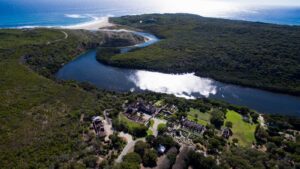

I really enjoyed reading your blog about experiencing Bali during the pandemic. The way you describe the feeling of solitude and the beauty of the island makes the journey feel both emotional and memorable. It’s interesting to see how travel can become more meaningful during uncertain times, allowing us to slow down, reflect, and appreciate the little things. Your story gave me a fresh perspective on Bali beyond its usual tourist attractions.